MSM Property Quarterly Newsletter Q1 2026

A note from our Founder & CEO

“As global economic uncertainties intensify, our first quarterly update for 2026 explores how South Africa-focused listed property could see a reassessment in investor sentiment. In times like these, locally grounded assets may start to look more attractive.”

Vuyani Bekwa, Principal – Private Equity, weighs in on the resilience of the domestic property market. He highlights several key tailwinds contributing to its continuing delivery.

Musi Skosana

THE SOUTH AFRICAN LISTED PROPERTY SECTOR IN Q1 2026:

The South African listed property sector delivered mixed returns during the quarter, with a sharp pullback in March offsetting gains made earlier in the year. Listed property markets were volatile during March 2026 due to global risk aversion amid geopolitical uncertainties. Despite share price volatility, underlying portfolio fundamentals improved during the quarter, including declining vacancies, stable tenant collections and improved balance sheets. Industrial‑focused REITs and domestically oriented portfolios continued to outperform office‑heavy counters.

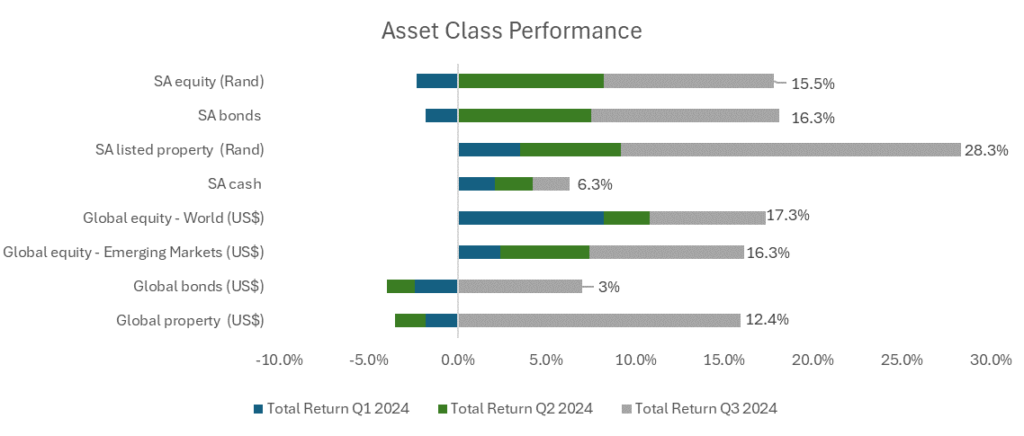
SA Asset Class Performance to 31 March 2026
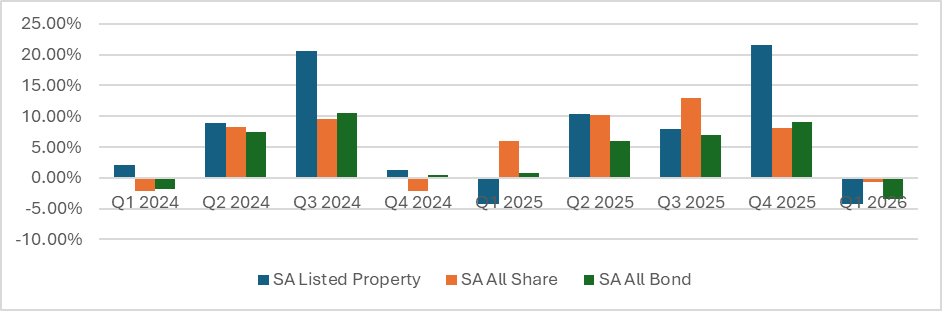
Figure 1: IRESS as at 31/03/2026

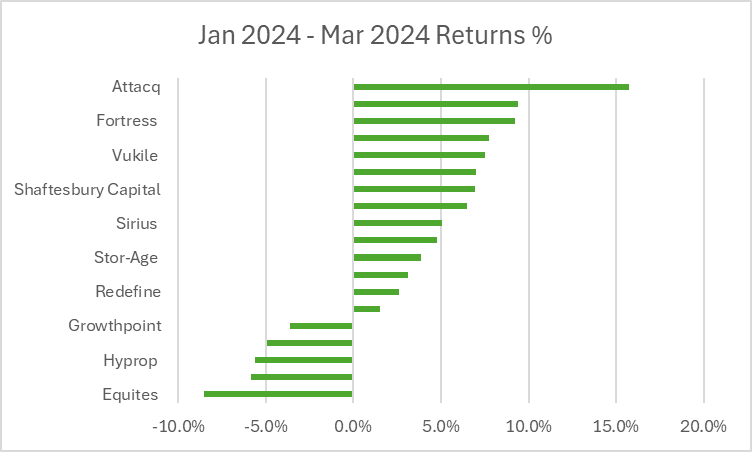
SA Listed Property delivered a weaker quarter (weak, but positive January (0.9%), even stronger February (8.1%), but March wiped out those returns, (-12.3%), resulting in a negative 4.34%. This was in line with bonds (-3.41%) and equities (-0.69%), as both also delivered negative returns for the quarter. Here is a performance graph of all the individual stocks in the SA Listed Property index.

Figure 2: Merchant West Investments

The SA Reserve Bank (SARB) held the repo rate steady at 6.75% on 29th January 2026, noting CPI slowed to 3.2% y/y in December – near the upper target band of 3% – helping funding visibility, sector sentiment and setting the scene for the strong returns for February. This also implied that, ceteris paribus, that interest rates would decline at the next SARB MPC meeting on 26th March 2026. However, the SARB never dropped interest rates due to the war in Iran.

GLOBAL MACRO CONTEXT AND MARKET TRENDS

The global macro context and market trends for Q1 2026 were characterized by a mix of optimism and caution. Markets shifted notably in Q1 2026 as investors grappled with rising energy prices, sector rotation, and growing uncertainty around the pace of global monetary easing. The optimism that characterised the final months of 2025 began to fade as commodity markets surged and equity leadership rotated. Energy stocks emerged as the clear outperformer across global markets, while technology and consumer sectors lost momentum. At the same time, bond markets experienced renewed volatility as investors reassessed inflation risks and the timing of interest rate cuts.

MACROECONOMIC LANDSCAPE

United States
The US economy entered 2026 with moderate momentum, but increasing uncertainty around the path of monetary policy. Consumer spending and a resilient labour market continued to support activity, although higher borrowing costs weighed on housing and corporate investment. Inflation pressures persisted into Q1, particularly as energy prices rose sharply, complicating the Federal Reserve’s policy outlook. Policymakers maintained a cautious tone, emphasising a data-dependent approach as they balanced the risks of easing too early against slowing growth.

Europe
Economic conditions across the euro area remained subdued. Industrial production continued to face pressure from weak external demand and elevated energy costs, while services activity provided only limited support.

The European Central Bank maintained a cautious stance, balancing slower growth with inflation that remained above target in several economies. Fiscal consolidation across parts of the region further contributed to a restrained economic backdrop.

Asia & Emerging Markets
Across Asia and emerging markets, performance remained uneven. Japan benefited from stable domestic demand and continued corporate reform momentum, supporting moderate growth.
In contrast, China’s recovery remained fragile, with structural challenges in the property sector and cautious consumer sentiment weighing on activity. More broadly, emerging markets remained sensitive to global capital flows and commodity price movements.
Overall, the macro backdrop in Q1 reflected a global economy that remained positive but fragile, leaving markets increasingly sensitive to commodity shocks, policy signals, and inflation developments.

THE WIDER ECONOMY – PERFORMANCE AND INSIGHTS
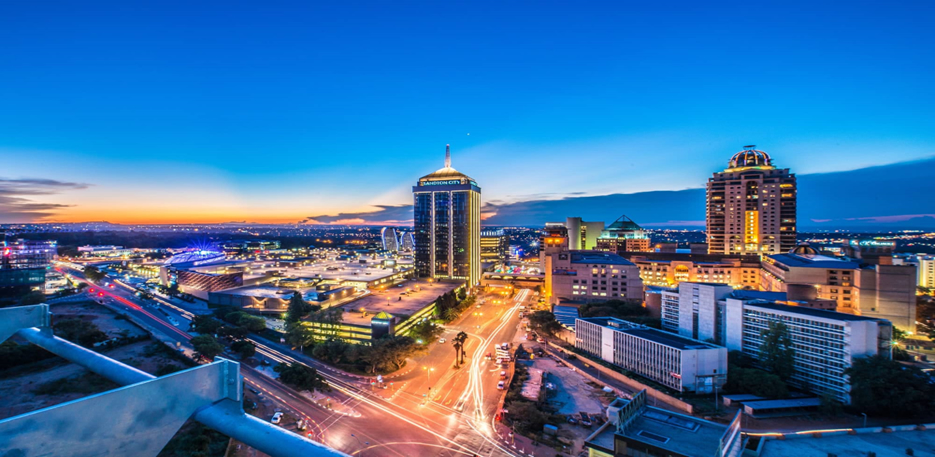
South Africa’s Gross Domestic Product (GDP) for Q4 2025 revealed a year-on-year growth rate of 0.9%, in line with expectations but still weaker in the broader economic context. While a technical recession was avoided, economic growth continues to lag population expansion, keeping the country in a per capita recession.

Sector Performance and Key Drivers

Agriculture rebounded significantly in Q4, growing by 17% due to a base effect after a sharp contraction in Q3 of 2024. However, agriculture remains a highly volatile sector, and while its strong performance in Q4 contributed nearly 50% of the quarter’s overall growth, it does not reflect a sustainable driver of economic expansion. Other contributors to economic activity included trade, catering, and accommodation, which benefited from a recovery in tourism, along with finance and real estate. However, key productive sectors such as mining and manufacturing continued to decline, highlighting the uneven nature of growth in the economy.

Consumer Spending and Investment Trends

Despite high unemployment rates, inflationary pressures, and interest rates remaining elevated, consumer spending increased for the third consecutive quarter. Consumers showed some resilience despite economic headwinds, with clothing and footwear seeing a notable 4.4% increase in spending. The two-pot pension withdrawal system also provided a short-term boost to household consumption, but it is not a sustainable source of long-term growth.

Investment concerns remain high as gross fixed capital formation, an essential indicator of economic reinvestment recorded another negative quarter. The continued decline in investment, particularly in residential construction, reflects weakened business confidence and limited long-term growth prospects.

Infrastructure and Global Trade Dynamics

Loadshedding relief provided a small boost to economic activity in Q4, as power disruptions were significantly lower than in previous quarters. However, infrastructure constraints, particularly at ports and railways, continue to hinder economic momentum. The easing of loadshedding was a welcomed development, but broader infrastructure challenges remain a significant drag on growth. While global trade dynamics had minimal impact in Q4, rising geopolitical tensions, especially in relation to the United States (US), pose risks for SA’s trade relationships in 2025.

In the medium-term budget statement, National Treasury supported the SA Reserve Bank’s lowering of the inflation target to 3%. The intention is to ensure a tighter range which will give more certainty on inflation. For February, inflation dropped to 3%, indicating that the SA Reserve Bank should have dropped interest rates, but geopolitical risks had risen so much that it held back to understand the impact of higher oil prices on local inflation.

THE DIRECT PROPERTY SECTOR: HOW HAS IT FARED – PERFORMANCE AND INSIGHTS

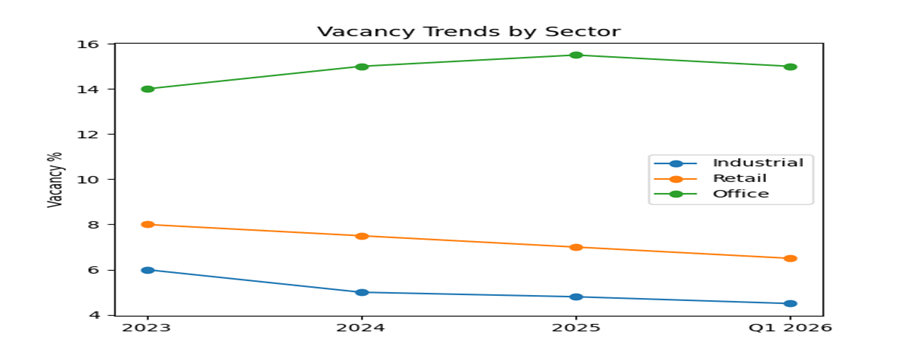
Direct property markets continued to stabilise across all major sectors. Vacancies trended lower nationally (as per graph below), supported by improved tenant demand and disciplined new supply. Performance remained node‑specific, with well‑located and higher‑quality assets outperforming.
RETAIL SECTOR:
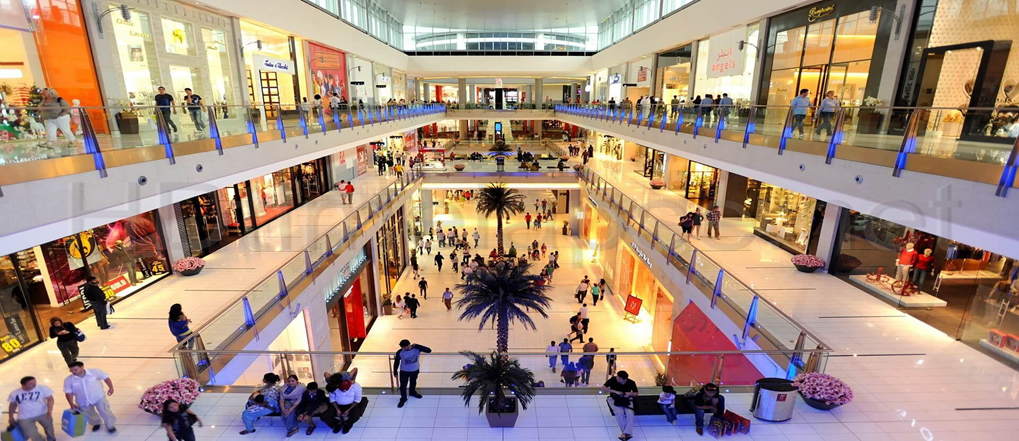
  • Retail property fundamentals continued to improve in Q1 2026, supported by resilient consumer spending and improved footfall.
  • Vacancies have declined to approximately 6–7%, with stronger performance in convenience and township retail formats.
  • Super-regional malls continue to recover, although rental growth remains modest.

INDUSTRIAL SECTOR: CONTINUES TO DELIVER

  • The industrial sector remains the strongest-performing segment of the market, supported by logistics demand, e-commerce growth, and supply chain optimisation.
  • Vacancy rates remain low (circa 4–5%), with positive rental growth observed across major nodes.
  • Development activity is increasing, particularly in logistics parks and last-mile distribution facilities.

OFFICE SECTOR: VACANCY IMPROVING IN LEAPS AND BOUNDS

  • The office sector remains under pressure, with elevated vacancies (circa 14–16%) and limited rental growth.
  • Decentralisation trends and hybrid working models continue to impact demand.
  • Adaptive reuse and conversions to residential remain key themes. This is taking place around the country where there is residential demand.

OUTLOOK AND STRATEGIC IMPLICATIONS FOR THE LISTED PROPERTY SECTOR

South Africa’s listed property market continues to show improving dynamics, with retail and industrial properties performing strongly, which has helped boost confidence across the sector. While offices are gaining traction, they are still lagging.

We ask you to be safe and feel free to contact us with any questions. We appreciate your support and confidence in us being able to manage and grow your wealth.

Vuyani Bekwa: Principal – Private Equity

Vuyani is the Principal – Private Equity with strong expertise in Listed Property, Asset Management, Fund Management and Private Equity. He holds a B Admin (Economics), University of Western Cape, a Post-Grad Diploma in Business Management and a Master-in-Business Administration (MBA), both from University of KwaZulu-Natal. He also has a FSCA accreditation with the RE5 and RE3 certification.

He began his career as an Economic Researcher for South Africa’s first socially responsible unit trust in 1995. He then moved into Listed Property and Equity Investment Analysis when he moved to Marriott Asset Management (now part of Old Mutual Investment Group) in 1997.

He spent 6 years managing listed property portfolios and being the portfolio manager for the Investec Property Equity Fund (now part of Ninety-One). He has spent the last ten years focusing on private equity structures; setting up or managing capital into funds and some with an impact focus. He is currently focusing on the MSM Infrastructure Impact Fund, which is looking for exposure into Industrial and Social Infrastructure Assets.

MSM Property Quarterly Newsletter Q4 2025

Before all else, a note from our Founder & CEO

As global economic uncertainty intensifies, our fourth quarterly update explores how South Africa-focused listed property could see a reassessment in investor sentiment. In times like these, locally grounded assets may start to look more attractive. Vuyani Bekwa, Principal – Private Equity, weighs in on the resilience of the domestic property market. He highlights several key tailwinds contributing to its continuing delivery.

Musi Skosana

THE SOUTH AFRICAN LISTED PROPERTY SECTOR IN Q4 2025:

The performance of the South African listed property in Q4 2025 was marked by a strong return of 16.7% pushing the total returns to 30.6% for the calendar year. This performance was driven by a sharp rally in South African government bonds, which significantly re-rated. The benchmark 10-year bond yield declined from 10,28% to 8,32% over the quarter, supported by several structural and cyclical tailwinds. The SA Reserve Bank adopted an inflation target of 3%, which strengthened their credibility in the market, anchoring inflation expectations and reducing the country’s risk premium. Higher commodity prices, such as gold, improved the fiscal outlook via stronger tax receipts, and the removal of the country from the Financial Action Task Force ‘grey list’ reduced systematic risk. Standard & Poors, the global ratings agency, upgraded the sovereign currency rating to BB, leading to an increase in the JP Morgan Emerging Market Bond index. This drove global inflows into SA bonds and lifted all other asset classes.

The performance of the listed property was also influenced by the broader market trends, with equities (FTSE/JSE All Share Index) outperforming property, returning 42.4%. Equities were driven by the resources sector (FTSE/JSE Resources 10 index, which delivered, +144%) as commodity prices surged.

The investment environment continues to improve, and the table below is a sample of some of the REIT stocks where we have exposure. These returns exclude distributions paid over the past 12 months:

Figure 1: Listed property price movement over the 12-months to 31 December 2025

Property delivered a solid 30.60% return for investors for the calendar year 2025 but was weaker than equity stocks (up 42.40%), but higher than bonds (up 24.20%). That strong showing came from a mix of rising property values, steady rental income and a re-rating of SA government bonds. It is a sign that South African property is recovering and looking attractive again, especially with interest rates easing and economic growth picking up, even if slightly.

Figure 2: Morningstar Direct as at 31/12/2025

Below we provide a concise overview of developments in the fourth quarter of 2025, focusing on key economic trends, sectoral performance, and the outlook for the period ahead.

GLOBAL MACRO CONTEXT AND MARKET TRENDS

Equities

U.S. stocks posted solid gains in Q4, with indexes like the S&P 500 advancing modestly and finishing the year with robust overall returns. The S&P 500 was up for the quarter and ended 2025 on strong footing following positive earnings and resilient consumer demand. Broader U.S. gains were helped by resilient corporate earnings, especially from large-cap growth and tech stocks, though volatility remained elevated at times. Concerns over stretched valuations — especially in mega-cap tech — were a recurring theme, resulting in some profit-taking and heightened sector rotation.

Global Equities

International markets outpaced U.S. equities in the quarter and year overall, driven by strong gains in Europe, Asia, and emerging markets. Global equity benchmarks such as the MSCI ACWI ex-USA delivered notable gains and were a highlight for diversified investors in 2025.
Emerging markets, particularly in Asia, exhibited impressive returns, supported by robust growth expectations and relative valuation appeal versus developed markets.

Commodities

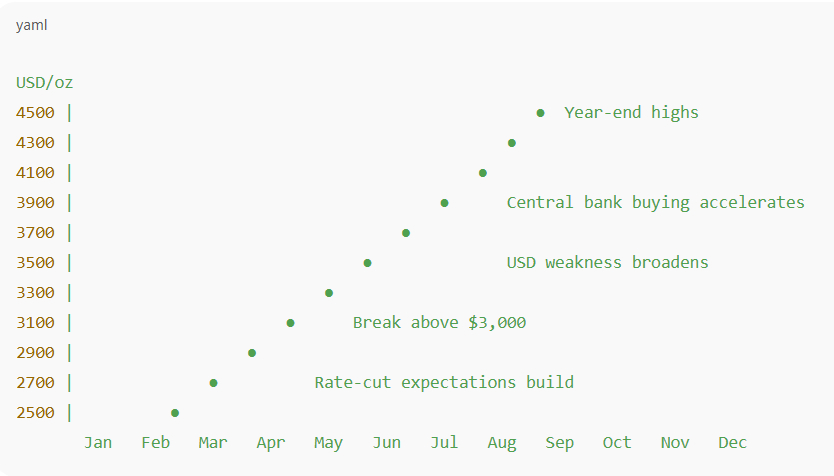
Precious metals surged, with gold and silver posting significant gains, reflecting their safe-haven appeal. This is reflected in the continuing increase in the gold price as can be seen from the chart below (with notations):

Figure 3: Gold price chart – 1 January – 31 December 2025 (in USD)

Price Highlights

• Start of Year: Gold began 2025 near $2,620–2,650/oz on 1 January.
• Mid-Year Rally: Prices climbed past $3,000/oz by mid-March and continued higher through spring and summer, breaking numerous historical thresholds in succession — including $3,100, $3,200, $3,300 and eventually above $3,800 by late September.
• Year-End Levels: Strong momentum carried gold toward the end of December, with closing prices around ~$4,300+ per ounce on 31 December 2025, reflecting a ~64%+ annual increase.
• Annual Return: According to the World Gold Council Gold Market Commentary, gold delivered exceptionally strong year-to-date returns in 2025 (over 60% in USD), with record prices reached across many currencies by year-end.

This performance represented one of the strongest yearly rallies in decades as investors progressively shifted to precious metals amid macroeconomic and geopolitical concerns.

Monetary Policy & Interest Rates

Major central banks, including the Federal Reserve, shifted toward more accommodative stances late in 2025 as economic growth showed signs of moderation. Rate cuts were either delivered or priced into markets, helping support risk assets. The U.S. labour market showed signs of softening, reducing inflationary pressures and bolstering expectations for lower rates, though the services sector remained resilient.

Inflation & Economic Growth

Inflation continued to ease in key regions, while consumer spending remained a key driver of economic resilience in the U.S. Global growth prospects were bolstered by supportive fiscal policies in Europe and stimulus efforts in Japan, even as geopolitical risks and trade uncertainty persisted.

Currency & Commodities

The U.S. dollar weakened against major currencies during the quarter and into early 2026 — an important theme for global markets, boosting foreign earnings for U.S. multinationals and supporting non-U.S. equity performance. Oil prices were pressured by higher inventories and softening demand signals, while gold reached multi-year highs as investors sought shelter from policy uncertainty and currency declines.

Sector & Regional Highlights

Technology & AI

Technology and AI-related stocks continued as dominant market drivers, with strong earnings results from major players and continued investment in generative AI and data centre capacity. However, tech valuations triggered debate about sustainability and rotation into value and cyclical sectors.

International Markets

European and emerging market equities delivered robust returns, assisted by easing inflation, fiscal stimulus in key economies, and attractive valuations. China’s market underperformance moderated global EM returns, though broader Asian markets remained strong.

Sector Rotation & Commodities

Precious metals outperformed many asset classes, driven by safe-haven demand and currency trends. Energy markets faced pressure from oversupply concerns, while commodities overall showed mixed performance.

Market Sentiment & Risks

Earnings Strength vs. Policy Uncertainty

Corporate earnings generally exceeded expectations, providing fundamental support for equities even amid macro scepticism. Nonetheless, ongoing trade policy uncertainty, geopolitical tensions, and questions about the durability of the growth cycle contributed to periodic volatility and investor “wall of worry” dynamics.

Summary

Q4 2025 was characterized by:
• Resilient equity gains in both U.S. and global markets despite macro uncertainties.
• Monetary easing expectations supporting risk assets and fixed income.
• Global diversification benefits, with international and emerging markets notably outperforming.
• Tech/AI leadership, valuations debates, and safe-haven flows into metals and quality assets.

THE DIRECT PROPERTY SECTOR: HOW HAS IT FARED – PERFORMANCE AND INSIGHTS

RETAIL SECTOR: MERGERS AND ACQUISITIONS – A CASE STUDY

Hyprop’s planned sale of 50% of Hyde Park Corner for R805 million in July 2025 to Millennium Equity Partners has ultimately collapsed, with the deal officially terminated in January 2026 after the buyer failed to meet transaction conditions. This leaves Hyprop still owning the entire Hyde
Park Corner asset, despite its strategic intent to recycle capital into the Western Cape and Eastern Europe.

Key Details of the Transaction

Asset: Hyde Park Corner, a 38,257 m² shopping centre in Johannesburg, one of Hyprop’s oldest and most prestigious properties.

Initial Plan (July 2025): Hyprop announced the sale of a 50% undivided share plus rental enterprise for R805 million.

Buyer: Millennium Equity Partners (MEP), a relatively small private property company with limited retail holdings.

Strategic Rationale: Hyprop aimed to free up capital to focus on Western Cape retail hubs (like Canal Walk and Somerset Mall) and expand further into Eastern Europe, where it already owns assets.

Future Plan: Hyprop had indicated it might sell the remaining 50% within two years, effectively exiting Hyde Park Corner.

Outcome (Jan 2026): The deal was terminated as Millennium Equity Partners could not fulfil transaction conditions.

Strategic Implications

Capital Recycling Blocked: Hyprop’s strategy to redeploy funds into higher-growth regions is delayed. This could slow its portfolio rebalancing away from Gauteng.

Market Confidence: The collapse highlights risk of partnering with smaller, less capitalized buyers in large-scale property transactions.

Asset Retention: Hyde Park Corner remains a prime Sandton retail destination, meaning Hyprop still benefits from its rental income and prestige, but also remains exposed to Gauteng’s slower retail growth compared to Cape Town and Eastern Europe.

The attempted sale of Hyde Park Corner illustrates both the ambition and challenges of South African REITs in repositioning their portfolios. While Hyprop’s intent to shift capital into higher-growth regions is sound, execution risk remains high when counterparties lack financial depth. For investors, the failure underscores the importance of transaction certainty in property deals. For Hyprop, retaining Hyde Park Corner may not be disastrous – it remains a blue-chip retail asset – but it does slow the company’s strategic pivot.
When looking at our exposure to Hyprop, because of our fundamental call on retail, we have it and are overweight when compared to the benchmark, sitting at 7% of the portfolio. Management have moved
in the right direction and understand the portfolio well and continue to derive good earnings growth going forward.

INDUSTRIAL SECTOR: DRIVEN BY MANUFACTURING GAINS DESPITE INFRASTRUCTURE CHALLENGES

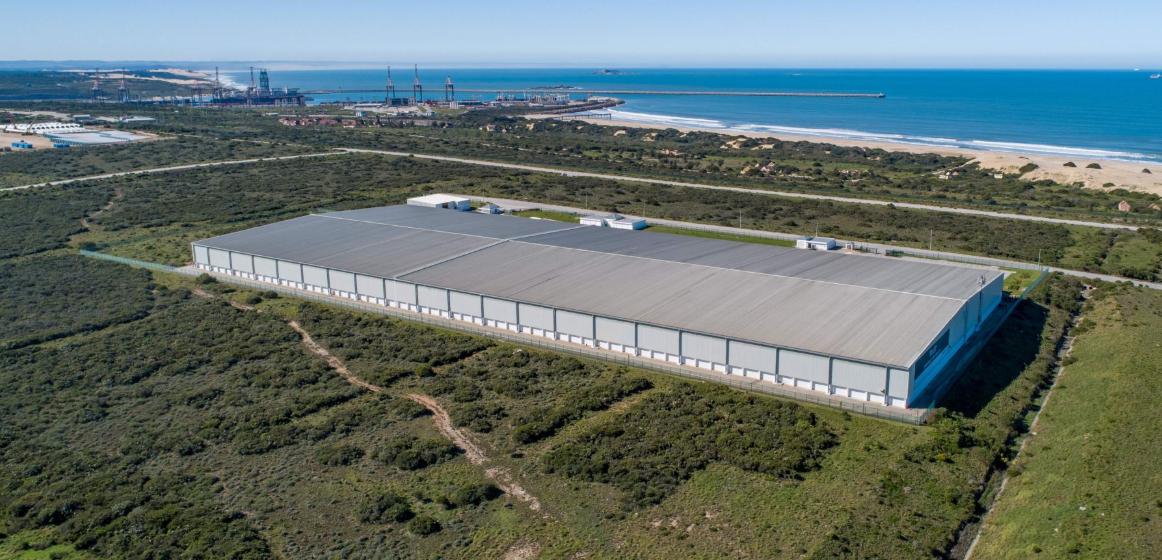
Redefine Properties’ modern logistics centre located in Zone One of the Coega SEZ in Gqeberha

Mixed Performance: Production vs Confidence

• Manufacturing output remained weak at the end of 2025. Official data show overall industrial production and manufacturing output declining about 1 % in November 2025 compared to the prior year, with some sub-sectors like wood products, metals and machinery, and motor vehicles particularly soft. However, there was some sequential quarterly increase in output in the three months to November 2025 versus the prior quarter.
• Business confidence improved materially in Q4, with the RMB/BER confidence index rising to 44 points, up from a one-year low of 39 in Q3. This was the first rebound after two consecutive declines and suggests sentiment is stabilising in the broader business environment.

Although production remains subdued and at times contractionary, firms are somewhat more optimistic about future activity — a necessary condition for investment decisions.

Macro-economic context
• South Africa’s GDP grew about 1.8 % in Q4 2025, reflecting resilience overall but highlighting that industrial sectors were not the main growth drivers — services and mining made stronger contributions.
• Business sentiment gains are positive, but cautious: a confidence index below 50 still implies that many firms see conditions as challenging relative to long-term benchmarks.

Outlook Implications

Short term:
The industrial sector is likely to remain uneven in early 2026, with output subdued and selective improvements in sectors tied to external demand (mining, some metals). A rebound in business confidence is a necessary but not sufficient condition for strong industrial recovery.

Medium term:
Policy interventions (e.g., automotive production support) and improvements in energy supply could help stabilise industrial activity. Structural reforms addressing logistics, investment incentives, and production competitiveness will be key to a sustainable rebound.

OFFICE SECTOR: SLOW RECOVERY AMID SHIFTING WORK PATTERNS

Office Picture

South Africa’s office vacancy rate declined to 12.8% in Q4 2025, the lowest since late 2020 according to SAPOA’s Office Vacancy Survey Report for Q4 2025 – and reflecting steady gains across several major nodes despite structural pressure in weaker markets. The peak overall vacancy was in June 2022 at 16.8%.

There is divergent performance by grade, with demand remaining strongest in Prime and A-grade offices, where vacancies fell to 5.8% and 10.8% respectively, reflecting ongoing occupier preference for modern, flexible, hybrid-ready space. In contrast, C-grade stock weakened to 16.5%, and large portions of B-grade offices remain under severe pressure.

Regional disparities of course persist, with Cape Town Metro sustaining its position as the best-performing market with a 6.3% vacancy rate, well below pre-pandemic levels. Notably, all of Cape Town’s office nodes now have vacancy levels below where they were when the national office vacancy rate peaked in Q2 2022, signalling consistent demand and effective stock absorption in the region. Johannesburg Metro, despite improvement, remains the city with the highest overall office vacancy rate at 16.5%, though much improved since its peak of 19.5% recorded in mid-2022. Despite the recent improvement, the city’s office vacancy rate remained well above its pre-pandemic level of 12.5%, reflecting continued challenges in absorbing excess stock across various nodes as many occupiers’ space requirements has changed.

Durban Metro’s vacancy rate improved to 12.4%, below its 2019 level. Much of this recovery has been driven by better-quality decentralised stock, particularly in the prime segment, which has returned to levels last seen in 2018.

Office development activity remains limited due and most new office projects remain tenant driven with very limited speculative development. Projects are largely tenant-driven with limited speculative activity, and the pre-let rate has eased to 55.6% from 71.4%. Troubled assets continue to weigh on recovery, with over half of all vacant office space concentrated in buildings that are at least 50% empty, particularly in the B-grade segment. These assets face structural and financial hurdles, pressuring rentals in weaker nodes.

While the vacancy rate has improved, the absolute level of vacant space exceeds 2.4 million sqm—significantly higher than in past cycles – indicating that oversupply continues to cap rental growth and valuations.

We ask you to be safe, and feel free to contact us with any questions. We appreciate your support and confidence in us, in being able to manage and grow your wealth.

Vuyani Bekwa: Principal – Private Equity
Vuyani is the Principal – Private Equity with strong expertise in listed property, asset management, fund management and private equity. He holds a B Admin (Economics), University of Western Cape, a Post-Grad Diploma in Business Management and a Master-in-Business Administration (MBA) Strategic Financial Management, both from University of KwaZulu-Natal. He also has a FSCA accreditation with the RE5 certification.
He began his career as an economic researcher for South Africa’s first socially responsible unit trust in 1995. He then moved into listed property and equity investment analysis when he moved to Marriott Asset Management (now part of Old Mutual Investment Group) in 1997. He then spent 6 years managing listed property portfolios and being the portfolio manager for the Investec Property Equity Fund (now part of Ninety-One). He has spent the last twelve years focusing on private equity structures, either setting up or managing capital into funds, some with an impact focus. He is currently busy focusing on the MSM Infrastructure Impact Fund, which is looking for exposure into Industrial and infrastructure assets.

MSM Property Quarterly Newsletter Q2 2025

Before all else, a note from our Founder & CEO

As global economic uncertainty intensifies, our second quarterly update explores how South Africa-focused listed property could see a reassessment in investor sentiment. In times like these, locally grounded assets may start to look more attractive. Senior Listed Property Analyst, Ntokozo Mkhize, weighs in on the resilience of the domestic property market. She highlights several key tailwinds contributing to its relative stability. Enjoy.

Musi Skosana

THE SOUTH AFRICAN LISTED PROPERTY SECTOR IN Q2 2025: POSITIVE MOMENTUM, GROWTH AND INVESTOR CONFIDENCE

In the second quarter of 2025, South Africa’s listed property market showed impressive momentum, particularly in May when the SA REIT sector delivered a 4.1% return. It outperformed both equities and bonds. Cumulative gains for the year reached 6.7% by the end of May, thanks to a robust April performance and a clear uptick in investor confidence. Market capitalisation broke through the R250 billion mark for the first time since January 2020, signalling renewed strength in the sector.

The investment environment continues to improve, with expectations of further interest rate cuts spurring optimism. Lower rates mean cheaper borrowing costs and higher potential income for investors, which makes property assets more attractive. Globally, about two-thirds of real estate markets have entered a “Buy” phase, suggesting a cyclical rebound. Central banks, including the Federal Reserve in the U.S. and the South African Reserve Bank, are either pausing interest rate hikes or beginning to cut rates, further easing funding pressures. In the UK, forecasts suggest a potential 100 basis-point reduction in 2025, amplifying the appeal of income-generating assets like listed property.

However, the global backdrop remains volatile. In June, President Trump unexpectedly doubled U.S. tariffs on imported steel and aluminium (excluding the UK), raising trade tensions and unsettling global markets. His unpredictable approach to tariffs added uncertainty and disrupted supply chains, leaving investors to reassess the economic and inflationary risks as the month unfolded.

Figure 1: Donald Trump in the White House Rose Garden, Source: Drew Angerer/Getty Images

South African stocks had a solid second quarter in 2025, with the FTSE/JSE All Share Index rising by about 5.3%. There was a brief dip in the middle of June, but the market quickly bounced back, closing the quarter at its highest levels in several months. This recovery signals that investor confidence in local equities has been reignited.

On May 29, the South African Reserve Bank lowered the repo rate by 25 basis points, bringing it down to 7.25%. This move was made in response to low inflation and a strengthening rand, with unanimous support from the Monetary Policy Committee. It was a clear message that the central bank sees room to support the economy without risking inflation. At the same time, the bank revised its economic growth forecast for 2025, reducing it from 1.7% to 1.2%. Although that’s a downgrade, it aligns with their efforts to make monetary policy more supportive.

Inflation stayed consistently low at 2.8% in both April and May, comfortably below the bank’s 3 to 6% target range. Given this calm inflation environment, the Reserve Bank is now exploring the idea of adjusting its inflation target altogether. It released modelling to support a possible shift to a tighter 3% goal, compared to the current midpoint target of 4.5%. However, any formal change would still need approval from the finance minister.

Below we provide a concise overview of developments in the second quarter of 2025, focusing on key economic trends, sectoral performance, and the outlook for the period ahead.

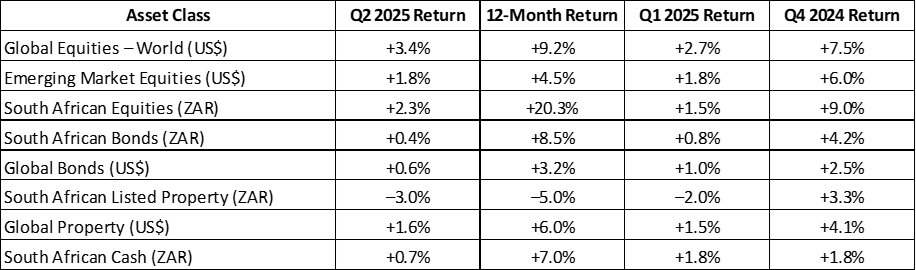
Asset Class Performance: Q2 2025 (1 April – 30 June 2025)

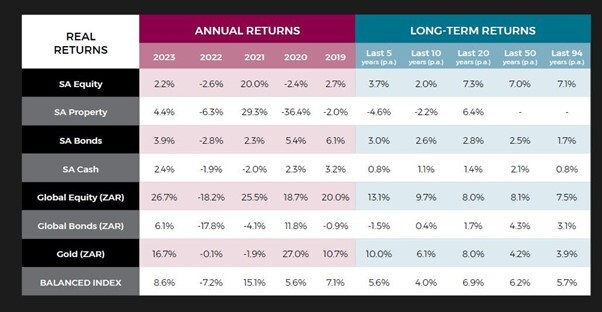
Figure 2: Q2 2025 & Prior Returns, Source: Bloomberg

GLOBAL MACRO CONTEXT AND MARKET TRENDS

During the second quarter of 2025, the global economy faced a lot of uncertainty. This was largely caused by unpredictable U.S. trade decisions, new tariffs, and rising political tensions, especially in the Middle East. These issues made investors nervous and stirred up financial markets around the world. Due to these challenges, experts lowered their expectations for global economic growth. They now think it’ll grow only by about 2.3% to 2.4%, which is slower than previously hoped. While inflation eased overall, the new tariffs caused supply issues that led to higher consumer prices in the U.S. and parts of Asia.

China’s economy remained resilient in Q2 2025 with GDP annual growth around 5.1%, though momentum slowed moderately from Q1. The deceleration reflected tariff headwinds, soft consumption, and property sector strain, despite policy support helping to stabilize activity during the quarter. The MSCI China Index delivered a modest net return of approximately +2.0% in Q2 2025, reflecting soft equity appreciation and minimal dividend income, well below the broader emerging markets’ rally which was weighed down by trade uncertainty, property-sector weakness, and subdued domestic demand despite monetary support.

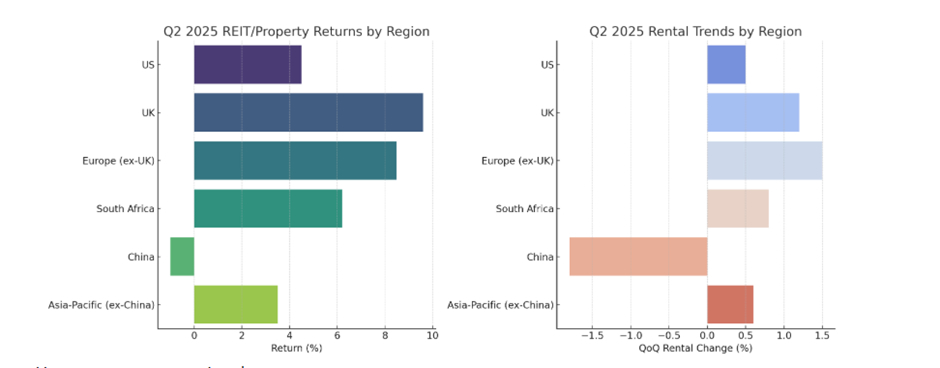
In terms of commodities, brent crude price during Q2 2025 fell sharply to approximately US $67.88 per barrel, down from about $75.73 in Q1, as OPEC+ eased production cuts and global supply conditions softened. The second quarter of 2025 marked a recovery phase for global property markets, especially in the UK, Europe, and select emerging markets. With interest rate cuts or stability across key central banks, income-seeking investors returned to REITs and real assets. While risks persist, especially in Chinese CRE and U.S. office segments, fundamentals in logistics, retail, and residential properties underpinned the global rebound.

Figure 3: Q2 2025 Returns by Region, Source: Bloomberg

PROPERTY SECTOR – PERFORMANCE AND INSIGHTS

South Africa’s economy is showing signs of bouncing back. In June, the South African Reserve Bank (SARB) lowered interest rates slightly, 0.25%, for the first time since 2020. This helped lift the mood among investors. As a result, certain parts of the market started to improve.

Shares in property companies did well, outperforming regular stocks. That’s because lower interest rates make property more appealing as they tend to offer better income returns, especially when retail spaces are steady and profitable. Bonds (government debt) also saw a small improvement, and the Rand (South Africa’s currency) strengthened a bit thanks to clearer government policies and investment strategies.

The country’s inflation is now under control and sitting comfortably within the Reserve Bank’s target range. Political uncertainty dropped following elections, and progress with the national power grid helped boost investor confidence. This led to more foreign investment, especially in South African bonds and property.

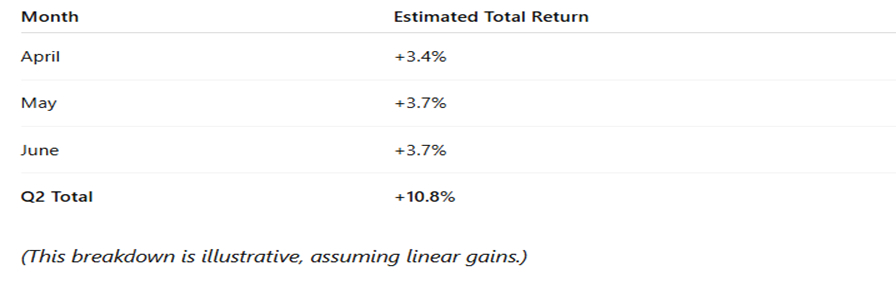
One of the biggest winners was the property sector. It delivered a solid 10.8% return for investors over the quarter, better than both equity stocks (up 10.2%) and bonds (up 5.9%). That strong showing came from a mix of rising property values and steady rental income. It’s a sign that South African property is recovering and looking attractive again, especially with interest rates easing.

Figure 4: Q2 2025 Monthly Total Return Breakdown, Source: M&G
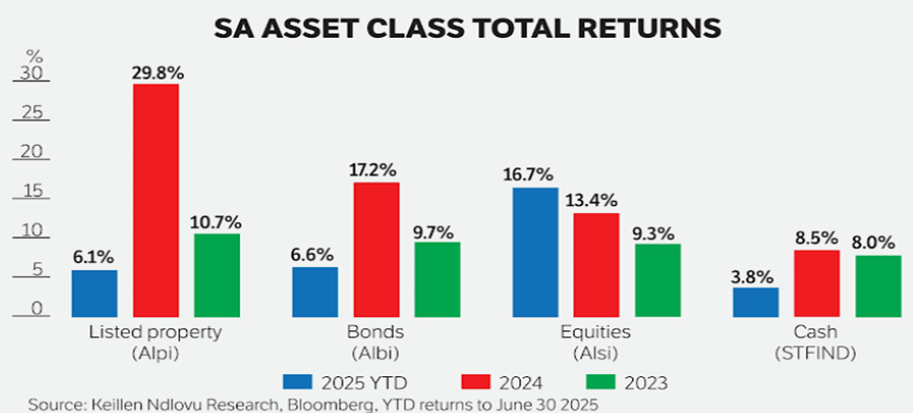
Figure 5: SA Asset Class Total Returns, Source: Keillen Ndlovu Research, Bloomberg

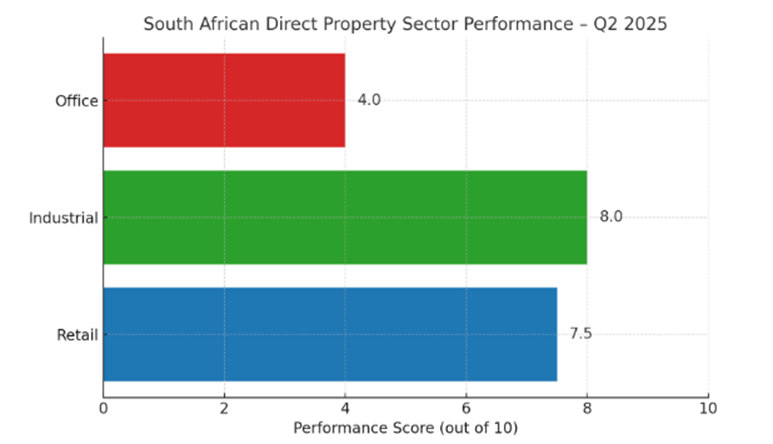
The SA direct property sector showed uneven recovery in Q2 2025, with retail and industrial assets outperforming, while offices remained weak. Easing rates, improved leasing momentum, and demand for essential retail/logistics space were key tailwinds.

Figure 6: Q2 2025 SA Direct Property Sector Performance, Source: SA REIT Association

South Africa’s property market showed mixed results in mid-2025. Office buildings, especially those in central business districts, were still struggling. Their values dropped, and landlords had to offer long rent-free periods or cover tenant costs just to keep spaces occupied. Vacancy rates were high, with more than 15% of offices sitting empty.

In contrast, retail and industrial properties held steady. Shops in busy areas, like convenience centres and township malls, did well, thanks to regular foot traffic and essential services like grocery stores and pharmacies. Industrial buildings, especially those used for storage and logistics near ports and highways (like in Gauteng and KwaZulu-Natal), were in high demand. This was driven by growth in online shopping and fast-moving consumer goods.

Properties offered attractive income returns of between 8.5% and 10%, which beat the returns from just holding cash or bonds. Investors were especially interested in buildings with good energy efficiency, backup power solutions, and strong locations. Their focus shifted to high-quality buildings with multiple tenants and reliable leases.

Overall, while offices remained the weakest link, retail and industrial sectors showed solid performance and attracted more investor interest.

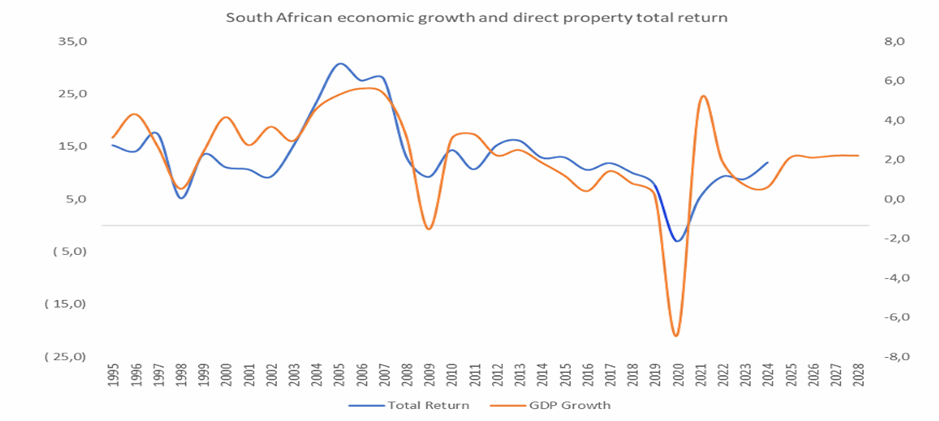
Figure 7: SA GDP growth and total return, Source: MSCI Data

RETAIL SECTOR: REBOUNDED ON STRONG FOOT TRAFFIC & RENTS

In the second quarter of 2025, South Africa’s retail property sector held up favourably well. The strong performance came mostly from shopping centres that have grocery stores as anchor tenants which were places people visit regularly for essentials. These kinds of properties continued attracting shoppers with consistent foot traffic and steady consumer spending.

Retail landlords made smart upgrades to their properties, like adding solar panels and improving store layouts, which helped keep them attractive to both tenants and investors. With online shopping growing rapidly, physical retail spaces had to evolve, so the most successful ones started focusing on community-based, mixed-use centres that offer more than just shopping.

Rental income improved. Shops were doing better in terms of sales, so they could afford slightly higher rent and this was the first time in over three years that rent prices improved, even if by 0.4%. Vacancies stayed low, meaning most spaces were occupied, especially for big property groups like Growthpoint and Redefine Properties. Grocery stores and other essential retailers drove most of the foot traffic, helping the retail sector stay strong.

Part of this strength came from better consumer confidence. People had more money to spend thanks to lower inflation, more household income, and changes in the retirement system (Two Pot) that gave them more access to savings.

All these factors boosted the earnings and values of retail property portfolios. Property companies kept reshaping their spaces to match changing needs. Also prioritizing green buildings, convenient layouts, and a better mix of stores. Increasingly, Real Estate Investment Trusts are turning traditional malls into experience-based destinations that combine retail with lifestyle services to stay competitive with online shopping.

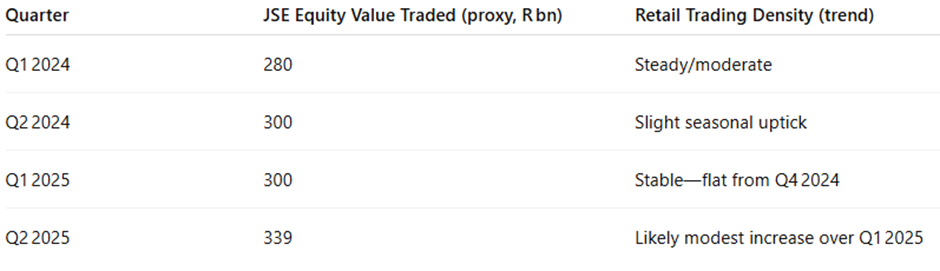
Figure 8: JSE value traded alongside turnover of retail-listed property trading density, Source: MSCI, SACSC

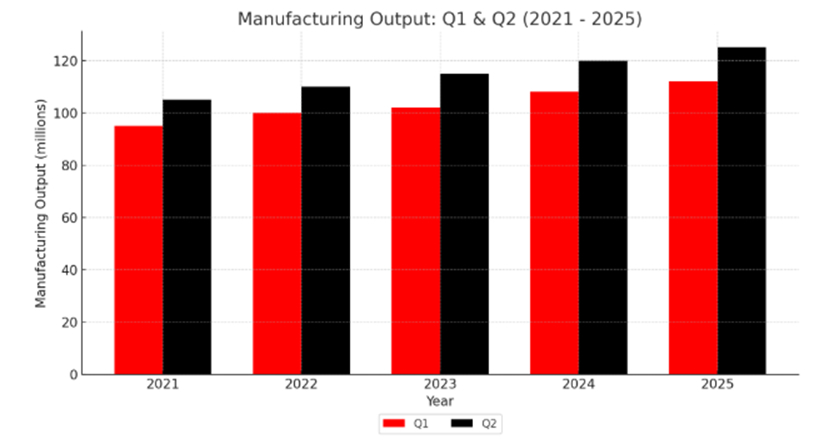
INDUSTRIAL SECTOR: DRIVEN BY MANUFACTURING GAINS DESPITE INFRASTRUCTURE CHALLENGES

South Africa’s manufacturing sector bounced back a little in May 2025, producing 0.5% more than it did a year earlier and growing 2% compared to April (which had taken a big hit, dropping 6.4%). Things are looking slightly better, but it’s far from a full recovery.

Business confidence in manufacturing is still low. A key indicator called the Purchasing Managers’ Index (PMI) shows how optimistic manufacturers are. If it’s above 50, it means things are growing; below 50 means they’re shrinking. May’s PMI was 43.1, which means manufacturing has been shrinking for seven months in a row.

Even though companies got more new orders, actual production remained weak. Another PMI from S&P Global, which looks at private businesses across sectors (not just manufacturing), showed almost no growth at barely above 50 in May.

In short, there are some signs of life, but manufacturers and private businesses are still struggling to gain momentum.

Figure 9: Manufacturing Output Q1 & Q2 (2021-2025)

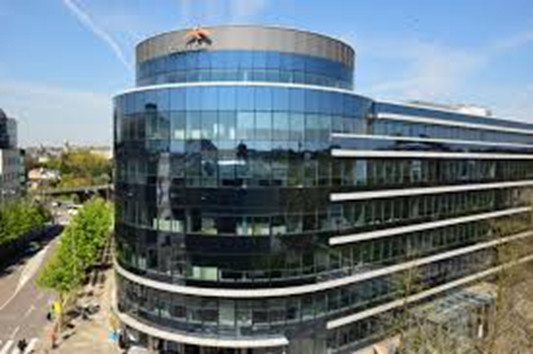
In this second quarter of 2025, South African businesses were feeling nervous. Confidence dropped to its lowest point in nearly four years, falling to 40 out of 100, which is a signal that many companies are cautious about the future. The reasons behind this dip are quite serious: poor rail and port services (especially from Transnet), expensive electricity, and confusion around U.S. trade tariffs all made running businesses harder. For example, the steel company ArcelorMittal said it might shut down its long-steel factories unless these problems are fixed soon.

South Africa’s local steel industry is really struggling. It’s so expensive and difficult to produce locally that over 35% of the steel being used now comes from overseas instead. Challenges like weak local demand, high energy prices, slow logistics, and tough competition have pushed South African factories into a corner.

Despite all these problems, there’s a glimmer of hope. Manufacturing output started climbing a little, and confidence among industrial businesses nudged upward and still fragile, but better than earlier this year. One bright spot is the industrial property market, which is growing thanks to the boom in online shopping and changes in global supply chains. Areas like Waterfall, Longmeadow, Cornubia, and Umgeni Business Park are doing especially well, with very few empty buildings and rents going up.

Therefore, while many companies are still hesitant due to infrastructure issues and global trade uncertainty, certain parts of the economy, especially logistics and industrial real estate are showing resilience. This targeted investment approach signals rising optimism in the logistics property sector. The market’s vitality is highlighted by strong occupancy rates and ongoing rental growth, as more businesses prioritize the expansion of their warehousing and distribution networks.

Figure 10: ArcelorMittal SA Building

OFFICE SECTOR: SLOW RECOVERY AMID SHIFTING WORK PATTERNS

South Africa’s office property market is slowly bouncing back from the chaos caused by the pandemic and oversupply. More companies are using their office space again, especially in popular areas like Sandton, Cape Town, and Rosebank. There are still a lot of empty offices, but vacancy rates seem to be levelling out. Rents haven’t changed much, but they have nudged slightly higher in key locations because there are not many new buildings coming up and people still want good-quality space.

Many businesses now mix working from home with coming into the office (the hybrid model), they’re looking for smaller, flexible offices that are well located and equipped with modern tech, safety features, and amenities. Sectors like finance, tech, and law are leading the charge in renting out space.

Not many new office buildings are being built. Developers are cautious and funding is tight, so the focus has shifted to fixing up and modernizing older buildings to meet new demands, especially with sustainability in mind.

Investors are starting to show interest again, especially in top-grade office buildings that have reliable tenants. Returns are still relatively good compared to other types of property, though the profit margin on high-end buildings is starting to shrink slightly.

Challenges like inflation and slow economic growth are still putting pressure on the office sector. Almost 1 in 5 office property deals are now looking to turn old office space into apartments or mixed-use buildings, with Johannesburg leading the way.

Looking ahead, the office sector is expected to keep improving bit by bit through the rest of 2025, helped by businesses merging operations, adopting smarter workspace strategies, and investors returning to quality buildings.

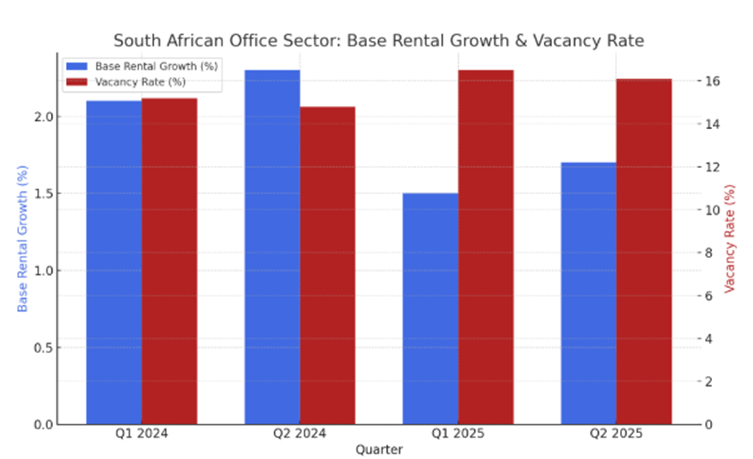
The bar graph below is comparing South African office sector base rental growth and vacancy rates across Q1 & Q2 of 2024 and 2025.

Figure 11: Base Rental Growth & Vacancy Rates

OUTLOOK AND STRATEGIC IMPLICATIONS FOR THE LISTED PROPERTY SECTOR

South Africa’s listed property market (basically, property companies whose shares are traded publicly) showed some encouraging signs in the second quarter of 2025. The worst challenges from the pandemic and high interest rates might finally be fading, which is giving investors a bit more hope.

Retail and industrial properties are doing well, which helped boost confidence across the sector. Companies are earning more steadily, showing they have become better at handling tough conditions and are slowly bouncing back.

However, while things are looking better, it’s still not smooth sailing. For property companies to keep improving and give shareholders good returns, they need to be smart about how they manage their money, refine their portfolios (meaning keep the good properties and dispose of non-core, low-performing assets), and carefully explore investment opportunities outside of South Africa. Therefore, cautious optimism is the mood, however it will take clever strategy and discipline to keep that momentum going.

In June 2025, the macro environment is turning supportive for listed property, with stabilising valuations and easing rates. However, outcomes vary significantly by region and asset class. Due diligence is essential and favour sectors with strong structural demand (e.g., data centres, residential, logistics, healthcare), and regions showing stabilization in funding and fundamentals. Meanwhile, watch out for policy-driven headwinds, such as urban rental caps or persistent oversupply.

We ask you to be safe, and feel free to contact us with any questions. We appreciate your support and confidence in us, in being able to manage and grow your wealth.

Figure 3: Builders Warehouse distribution centre in Waterfall, Midrand; Source: Attacq.co.za

This targeted investment approach signals rising optimism in the logistics property sector. The market’s vitality is highlighted by strong occupancy rates and ongoing rental growth, as more businesses prioritize the expansion of their warehousing and distribution networks.

OUTLOOK AND STRATEGIC IMPLICATIONS FOR THE LISTED PROPERTY SECTOR

South Africa’s listed property sector is in a good position to benefit from positive local and global trends in the second quarter. The South African Reserve Bank’s carefully considered approach to easing interest rates, along with a stronger rand, supports continued investor interest in property assets. The significant reduction in loadshedding and improving vacancies across the board is expected to bear positive effects on listed property stocks.

Stable inflation could drive more demand for income-generating assets like property stocks and bonds. Although these developments are encouraging, the property sector continues to contend with challenges such as infrastructure constraints, elevated unemployment, and increasing energy expenses.

In short, the first quarter and rest of 2025 has reflected both challenges and even better opportunities. Going forward, staying adaptable and focusing on growth areas will be the key to maintaining this positive trend and delivering value for investors, backed by strong investor support and an improving economic environment. Listed property is still trading at substantial discounts to Net Asset Value (NAV), and over time, prices should catch up to the true intrinsic value of the underlying properties.

We ask you to be safe, and feel free to contact us with any questions. We appreciate your support and confidence in us, in being able to manage and grow your wealth.

Ntokozo Mkhize – Senior Listed Property Analyst
Ntokozo is a Senior Listed Property Analyst with strong expertise in listed property, valuation, and asset management. She holds a BCom (Finance) and Honours in Quantity Surveying from Wits, an MSc in Real Estate from UP, and RE5 certification.
She began her career at Jones Lang LaSalle in Capital Markets, later specialising in valuations for major REIT clients across Sub-Saharan Africa. Ntokozo was Director and Lead Valuer at Strata Properties, then moved into listed property research at Afrifocus, followed by roles at Meago Asset Management and the Public Investment Corporation.

MSM Property Quarterly Newsletter Q1 2025

Before all else, a note from our Founder & CEO

In our first quarter update of the year, we focus on the sector and how it has been able to hold steady as the winds of change have blown through by the Trump administration. Vuyani Bekwa, our Private Equity Principal, gives his views on the property sector and the major forces holding it up following the 29% benchmark increase in listed property for 2024. Enjoy.

Musi Skosana

THE SOUTH AFRICAN LISTED PROPERTY SECTOR: A NEW YEAR, NEW DYNAMICS – SA LISTED PROPERTY IN Q1 2025

The first quarter of 2025 is memorable for both global and South African markets. The US President Donald Trump started his second term in mid-January and immediately focused heavily on immigration and economic policies, including imposing tariffs on trading partners, which led to concerns about a potential global recession.

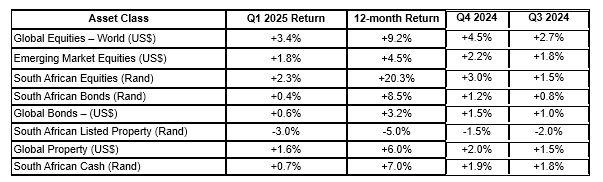
In South Africa, the FTSE/JSE All Share index, which tracks the performance of companies listed on the Johannesburg Stock Exchange, followed global markets, trending up 2.4%, Listed property suffered a loss of -3.0%, and was the only sector that delivered negative returns over the quarter this year, mostly due to some profit-taking after 2024’s stellar returns. The SA Reserve Bank loosened monetary policy after an extended period of restrictive policies reflected by high interest rates, while issues like geopolitical tensions and inflation continued to influence the landscape positively. The SA Reserve Bank cut interest rates by a further 25 basis points at the end of January, to align with international markets.

Here, we’ll dive into a straightforward overview of how things went in Q1 2025, including key economic trends, sector performance, and what to expect moving forward.

Asset Class Performance: Q1 2025 (1January – 31 March 2025)

Figure 1: Q1 2025 Returns, Source: Bloomberg

GLOBAL MACRO CONTEXT AND MARKET TRENDS

The global economy has seen some big changes, with major central banks across the globe stepping in to try and boost economic growth. In the U.S., the Federal Reserve (Fed) cut interest rates by 1.0% (0.5% in September and another 0.5% in December). This drove the shift away from the restrictive policies which were prevailing and started to encourage more economic activity and support for the labour market while working on bringing inflation down to its 2% target. When Donald Trump was inaugurated in mid-January, markets started to run in anticipation of new policies which were expected to be more market friendly.

The US economy contracted by 0.3% in Q1 2025, marking the first decline since early 2022, attributed to escalating trade tensions and a surge in imports. The S & P 500 Index fell by 4.3% during the quarter, with nearly all the loss occurring in March, amid increased market volatility and uncertainty around tariffs. Global markets improved by 3.4% in Q1 2025. but saw divergent performance with Asian and Chinese markets showing resilience amid policy support, while the US faced economic contraction, and market declines due to trade tensions.

China set a real GDP growth target of around 5% for 2025 and adopted expansionary fiscal and monetary policies to boost domestic consumption. The MSCI China Index returned 15.02% in Q1 2025, reflecting strong performance in China’s capital markets, despite the tariff volatility.

Commodities reflected these shifts too: Brent crude oil prices dropped from $79.27/bbl to $71.74 /bbl (-9.4% in Q1 2025), driven by fears of reduced oil consumptions on the back of weakening global economic indicators and the impending trade war. Gold made a huge comeback (19.1%), increasing from $2,623 up to $3,123/oz, largely due to increasing global risk driven by the US stance on trading tariffs, and increasing uncertainties in the global economy. Property markets around the world showed mixed results: while lower rates boosted real estate in the U.S. and Europe, Japan and China still faced challenges, showing that recovery varies widely across regions.

SOUTH AFRICA’S MARKET SHIFTS

South Africa’s economy continued to be influenced by both local and international factors. The FTSE/JSE All Share Index, which reflects the performance of the companies on the Johannesburg Stock Exchange, climbed 2.4% in the first quarter, contributing to a 12-month gain of 20.3%. This growth was delivered due to perceived increased political stability with the formation of the Government of National Unity (GNU), a rise in investor confidence and a positive economic environment driven by a looser monetary stance due to lower inflation, with interest rates dropping by 75 basis points from its high in September 2024.

DIRECT PROPERTY SECTOR – PERFORMANCE AND INSIGHTS

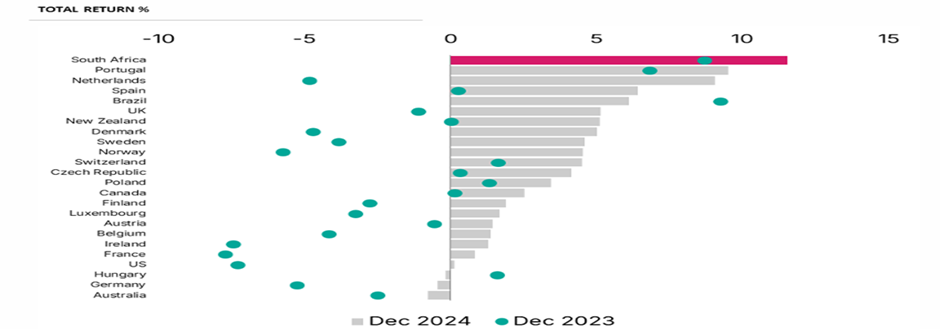
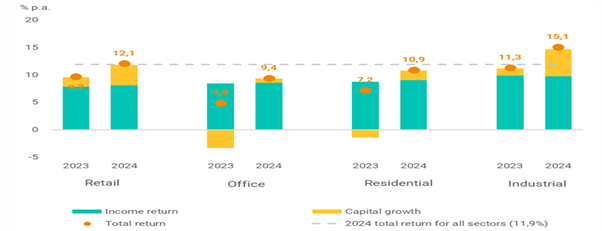
South African direct property returns were the highest globally over 2024 as highlighted by the graph below. This is nothing new as the returns were also strong in 2023, second only to Brazil.

Source: MSCI Data

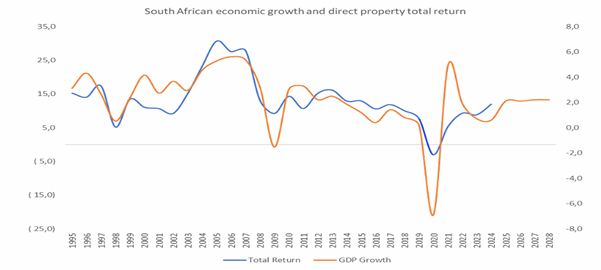
There is a strong correlation between GDP growth and total returns, ungeared direct property, and in our opinion, because GDP is expected to start picking up due to reduced loadshedding, a better economic environment (even though there are challenges) and lower interest rates, we think that the sector could deliver better returns going forward, which could translate to the listed property sector.

Source: MSCI Data

The total returns improved for each sector – with the industrial sector again showing the best total returns. As the economy is driven by financial services, manufacturing, exports, etc. and not just retail, the industrial sector should continue to perform well, especially since the consumer is struggling due to high interest rates, and a tough economy, hampered by high unemployment rates, and high administered prices.

Source: MSCI Data

RETAIL SECTOR: IMPROVING SENTIMENT AND ECONOMIC ENVIRONMENT

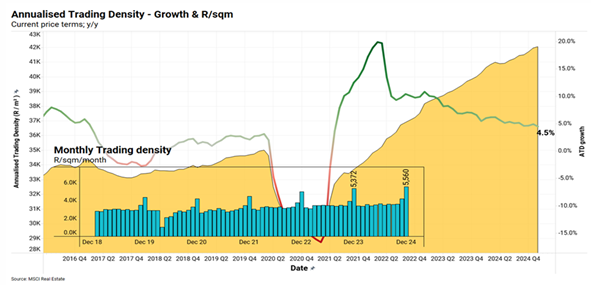
In the retail sector, the benchmark is to measure how much total revenue a tenant can make per square metre that they occupy. The higher the revenue per square metre, the better will be the trading density, and the more profitable the tenant is likely to be. This also measures how each tenant is doing in different geographies around the country. The following graph reflects the annualised trading density – from 2018 to the end of 2024. As one can see there was a blip in 2020 due to the limited trading activity brought on by Covid-19, during the lock down. The annual trading density growth is around 4,5% driven by inflation and volume growth.

OFFICE SECTOR: STILL SOME WAY TO GO TO FULL RECOVERY

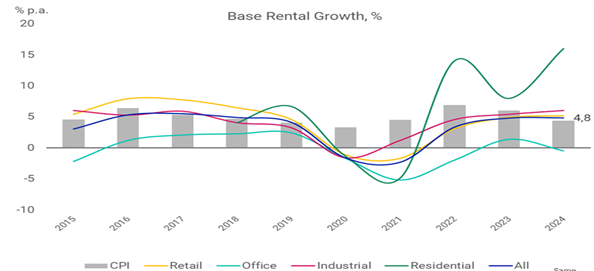
Office rentals have been declining while other sectors delivered real growth – what has been highlighted by the results to 31 December 2024, is that office rentals are still under pressure and that the recovery is in specific areas. Rental growth is exceeding inflation in all sectors except offices, while vacancies remain flat throughout. The office sector continues to be a laggard, but there are some areas of recovery. SA’s office vacancy rate recorded 13.7% during Q4 2024, up 10 basis points from Q3 2024 according to SAPOA’s Office Vacancy Survey – the first increase since Q2 2022 when vacancies peaked at 16.7% followed by an improvement for nine consecutive quarters. Despite the marginal deterioration in vacancies, growth in asking rentals accelerated to 2.2% year-over-year and while this is well below inflation, it may signal that overall supply and demand is edging closer to equilibrium.

The graph below highlights a consolidated sector index, by taking all the properties in a sector and applying the rental growth.

INDUSTRIAL SECTOR: DEMAND FOR LOGISTICS PROPERTIES REMAINS ROBUST

The industrial and logistics property market continues to grow – a growth derived from the continued rise of e-commerce and shifts in global supply chains. All industrial hubs, including notable sites like Waterfall’s distribution hub, Longmeadow, and Durban’s Cornubia and Umgeni Business Park, are performing very well, with low vacancies and strong rental growth.

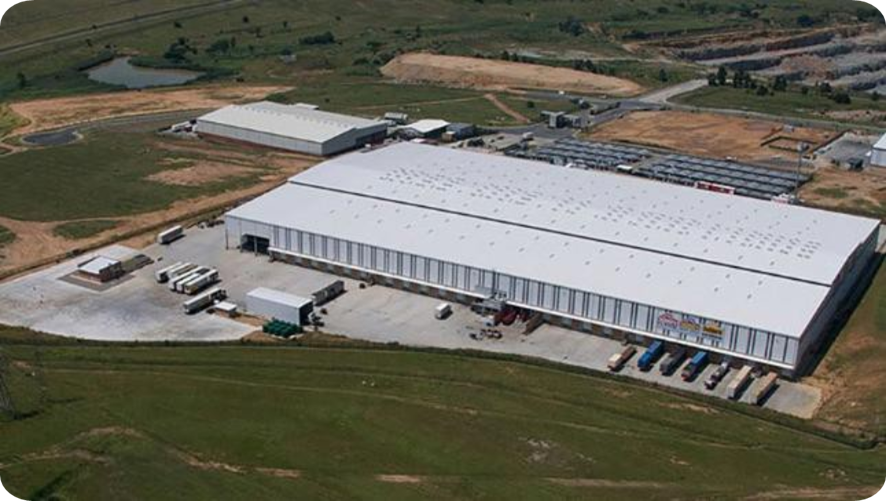
Figure 3: Builders Warehouse distribution centre in Waterfall, Midrand; Source: Attacq.co.za

This targeted investment approach signals rising optimism in the logistics property sector. The market’s vitality is highlighted by strong occupancy rates and ongoing rental growth, as more businesses prioritize the expansion of their warehousing and distribution networks.

OUTLOOK AND STRATEGIC IMPLICATIONS FOR THE LISTED PROPERTY SECTOR

South Africa’s listed property sector is in a good position to benefit from positive local and global trends in the second quarter. The South African Reserve Bank’s carefully considered approach to easing interest rates, along with a stronger rand, supports continued investor interest in property assets. The significant reduction in loadshedding and improving vacancies across the board is expected to bear positive effects on listed property stocks.

Stable inflation could drive more demand for income-generating assets like property stocks and bonds. Although these developments are encouraging, the property sector continues to contend with challenges such as infrastructure constraints, elevated unemployment, and increasing energy expenses.

In short, the first quarter and rest of 2025 has reflected both challenges and even better opportunities. Going forward, staying adaptable and focusing on growth areas will be the key to maintaining this positive trend and delivering value for investors, backed by strong investor support and an improving economic environment. Listed property is still trading at substantial discounts to Net Asset Value (NAV), and over time, prices should catch up to the true intrinsic value of the underlying properties.

We ask you to be safe, and feel free to contact us with any questions. We appreciate your support and confidence in us, in being able to manage and grow your wealth.

Figure 3: Builders Warehouse distribution centre in Waterfall, Midrand; Source: Attacq.co.za

This targeted investment approach signals rising optimism in the logistics property sector. The market’s vitality is highlighted by strong occupancy rates and ongoing rental growth, as more businesses prioritize the expansion of their warehousing and distribution networks.

Vuyani Bekwa – Principal: Private Equity
Vuyani is an experienced real estate and investment professional, recognized for his strategic leadership in fund and asset management, private equity, property, and renewable energy. He is an ex-Portfolio Manager at Investec Asset Management (now Ninety One), where he managed the award-winning Investec Property Equity Fund and institutional mandates, ex-Fund Manager for Liberty’s Property Portfolio (R30bn), and oversaw three private equity funds at Eris Property Group (R8bn). Vuyani holds a Bachelor’s degree in Public Administration (Economics) from the University of the Western Cape, a Post-Graduate Diploma in Business Management, and an MBA in Strategic Financial Management, both from UKZN. He also holds FAIS-recognized RE 5 certification.

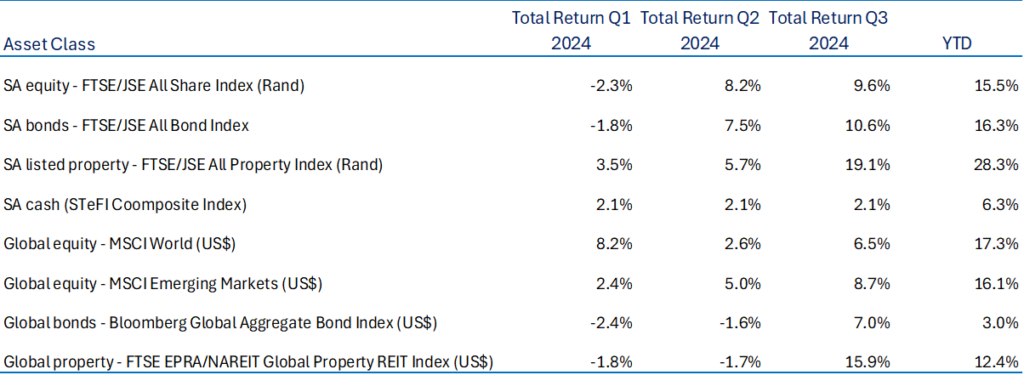
MSM Property Quarterly Newsletter Q3: Listed property stocks had their best quarter this year, gaining 19.1% in Q3 and maintaining outperformance against other asset classes

Before all else, a note from our Founder & CEO

In our revised third quarter update on the sector, we look to improve our communication with you, our Investor. Read on for more information on how the recent uplift of the listed property sector is doing, after the elections held earlier in the year. Zinhle paints a picture of a sector that is growing and maintaining the gains it has made earlier in the year. Enjoy.

Musi Skosana

The South African Listed Property Sector: Navigating Global Recovery and Local Opportunities

The third quarter of 2024 was a notable period of adjustment for both global and South African markets. For investors in South African listed property, there was a mix of cautious optimism as central banks turned to more supportive policies after an extended period of restrictive policies reflected by high interest rates, while issues like geopolitical tensions and inflation continued to influence the landscape.

In South Africa, the market held up well and the listed property sector emerged as the outperforming sector on the Johannesburg Stock Exchange. The FTSE/JSE All Share Index, which tracks the performance of companies listed on the Johannesburg Stock Exchange, grew by 9.6% in the third quarter, adding to a 16% gain for the year so far. This rise was supported by increased political stability after recent elections and growing investor confidence. Listed property stocks had their best quarter this year, gaining 19.1%, followed closely by the Financials sector. Here, we’ll dive into a straightforward overview of how things went in Q3, including key economic trends, sector performance, and what to expect moving forward.

Figure 1: Q3 2024 Returns, source: Bloomberg

Global Macro Context and Market Trends

The global economy has been seeing some big changes, with major central banks across the globe stepping in to try and boost economic growth. In the U.S., the Federal Reserve cut interest rates by 0.5% in September, shifting away from strict policies to encourage more economic activity and support the labour market while working on bringing inflation down to its 2% target. The FED cited the reason for cutting rates was to ensure a “soft landing” for the U.S. economy by avoiding a potential recession as a result of the higher for longer interest rates. This gave a positive lift to stock markets: the S&P 500, which tracks 500 of the biggest U.S. companies, rose by 2.0%, and the Nasdaq, known for tech stocks, went up by 2.7% during the quarter. These gains added to a 1.9% rise in the MSCI World Index, which reflects the general mood in global markets reacted positive to the central bank developments.

In Asia, the Chinese government launched a huge $325 billion stimulus package to address ongoing economic challenges, including a prolonged property market downturn and weak consumer spending, was aimed to support state banks, stimulate the struggling property sector and boost domestic consumption. This package, which is

the largest since the global financial crisis,

caused the Shanghai Composite—a key index showing how Chinese companies are doing—to jump by 17.4% in just one month. This move was aimed at fighting deflation and helping China’s heavily indebted property sector. While it created some short-term optimism, there are still questions about whether China’s debt-driven growth can hold up over time and the ability for China to meet its economic growth target of 5% GDP growth for the year.

Commodities reflected these shifts too: Brent crude oil prices dropped by 8.9% in September driven by fears of reduced oil consumptions on the back of weakening global economic indicators despite supply concerns over the Middle East war, while both gold and iron ore made a 5.2% comeback, largely due to China’s industrial demand. Price recovery in gold as a safe-haven asset was also as a result of uncertainties in the global economy. Property markets around the world showed mixed results: while lower rates boosted real estate in the U.S. and Europe, Japan and China still faced challenges, showing that recovery varies widely across regions.

Watching these indexes, like the S&P 500 in the U.S. or the Shanghai Composite in China, can give a snapshot of each region’s economic health and how they’re responding to policy changes. They help simplify what’s happening in the market and show how different economies react to global trends.

South Africa’s Market Dynamics and Property Sector Resilience

South Africa’s economy has shown a solid response to recent positive? changes, influenced by both local and international factors. The FTSE/JSE All Share Index, which reflects the performance of companies on the Johannesburg Stock Exchange, climbed 9.6% in the third quarter, contributing to a year-to-date gain of 16%. This growth was bolstered by increased political stability following the recent elections and a rise in investor confidence.

Notably, the listed property sector had its strongest quarter this year, surging 19.1%,

with the Financials sector not far behind. Both of these sectors tend to be sensitive to interest rates, making the recent 0.25% rate cut by the South African Reserve Bank (SARB)—its first since 2020—particularly significant. Although this cut was smaller than the one made by the U.S. Federal Reserve, it was welcomed by the market, increasing demand for listed properties and lowering borrowing costs for businesses. This came after the inflation numbers in September printed a 3.8% year-on-year change, reflecting a continued disinflationary trend and comfortable within the SARB’s 3-6% inflation target.

Figure 2: SA inflation, YoY % change, source: Anchor Stockbrokers

The South African rand also saw a boost,

strengthening to R17.26 per U.S. dollar, marking a 6.3% increase for the year.

This currency stability, combined with improved bond yields (now at around 10%), created a supportive environment for both consumers and businesses, which in turn benefits the property market. The South African property sector continued its strong performance through the third quarter, with listed property stocks leading the way. The JSE All Property Index (ALPI) rose by 19.1% in Q3, bringing its year-to-date gains to a solid 30.3%. This impressive performance reflects growing investor confidence, as economic indicators like inflation ease, the rand strengthens, and property companies show stronger financial health.

SECTOR-SPECIFIC PERFORMANCE & INSIGHTS

Retail Property Sector: Resilience Amidst Consumer Constraints

The retail property sector has shown resilience despite high interest rates and slow GDP growth, as consumers have adapted their shopping habits. According to the MSCI South Africa Retail Trading Density Index, which collects retail data and tracks the average turnover per square meter for shopping centre landlords across South African, retail trading activity rose by 5.3% year-over-year through June 2024. This growth reflects how well consumers are adjusting to economic challenges while continuing to shop.

Different types of retail spaces showed varying results, highlighting shifting consumer priorities. Large malls, like Super Regional and Regional malls, saw a steady 4.7% growth in average trading density (ATD), which measure the revenue generated by tenants per square meter of retail space rented. The larger shopping centres benefited from discretionary spending and their appeal as experience-focused shopping destinations as consumer confidence showed an improvement. Smaller, local centers—such as Neighborhood and Community centers—performed even better, with ATD growth of 5.9% and 5.8%, thanks to their focus on convenience and essential shopping. In contrast, Small Regional centers grew only by 4.2%, suggesting that mid-sized locations might be losing out as shoppers prefer either the larger, experience-based malls or smaller, nearby options for everyday needs.

JSE-listed property companies with investments in Central and Eastern Europe (CEE) have also benefited from economic strength and strong retail activity in those regions. Companies like NEPI Rockcastle, MAS PLC, and Hyprop have seen gains due to rising wages and tourism in CEE countries. Similarly, Vukile’s Spanish and new Portuguese properties, along with Lighthouse Properties’ focus on Southern Europe, highlight the strategic value of diversifying into international retail markets with stronger economic landscapes.

Office Sector: Stabilizing Yet Constrained by Structural Challenges

The office market has been gradually recovering, with vacancy rates dropping to 13.6%

quarter 3 2024 according to SAPOA’s latest office report, a noticeable improvement from 16.7% in 2022. High-quality office spaces (A- and P-grade) have seen stronger demand, as tenants increasingly seek modern buildings with energy-efficient features and top amenities. Cape Town stands out with the lowest vacancy rate in the country at 6.7%, compared to Johannesburg’s higher rate of 16.3%, showing how supply and demand dynamics impact regions differently.

The growth of the Business Process Outsourcing (BPO) sector in South Africa, which has reportedly added a number of jobs over the years as South Africa has gained popularity as an ideal location for global BPO companies, has boosted office demand in cities like Cape Town and Durban. Still, B-grade office spaces, which are often lower quality, older offices in less ideal locations, and certain areas face challenges due to oversupply and slow demand. Developers are taking a more cautious approach, with very few speculative projects for offices and higher percentages of pre-leased spaces, as long-term structural issues continue to shape the market’s growth.

Industrial Sector: Demand for Logistics Properties Remains Robust

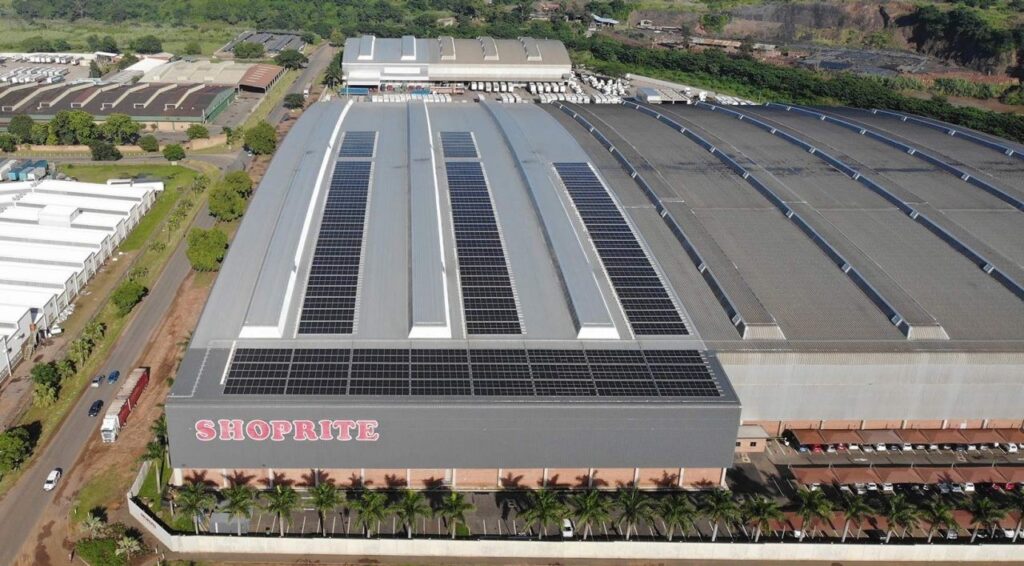
The industrial and logistics property market is thriving, driven by the steady rise of e-commerce and shifts in global supply chains. High-quality logistics spaces, especially those well-placed for last-mile delivery and modern distribution centres, have performed particularly well. Property companies like Equites have invested significantly in top-tier distribution centers in South Africa and the UK, including notable sites like the Shoprite’s Canelands distribution hub.

Figure 3: The Shoprite Canelands distribution centre in KwaZulu-Natal; source: Shopriteholdings.co.za

This strategic investment approach, paired with a careful eye on new developments, reflects growing confidence in the logistics property sector. The strength of this market is clear from high occupancy rates and steady rental growth, as more companies focus on expanding their warehousing and distribution capacities.

Outlook and Strategic Implications for the Listed Property Sector

As we head into the fourth quarter, South Africa’s listed property sector is in a good position to benefit from positive local and global trends. The South African Reserve Bank’s careful approach to easing interest rates, along with strong performance in local stocks and a stronger rand, supports continued investor interest in property assets. The significant reduction in loadshedding as well as the Two-Pot Retirement System are also expected to be positive effects on property.

International central banks also play a role here, as stable inflation could drive more demand for income-generating assets like property stocks. While these are promising signs, the sector still faces some challenges, like infrastructure issues, high unemployment, and rising energy costs. To keep building momentum, listed property companies will focus on high-quality properties, expanding internationally, and making smart investment choices.

In short, the third quarter of 2024 has shown both challenges and opportunities. The sector’s resilience, backed by strategic planning and strong investor support, highlights its potential. Going forward, staying adaptable and focusing on growth areas will be key to maintaining this positive trend and delivering value for investors.

We ask you to be safe and feel free to contact us with any questions and we appreciate your support and confidence in us, in being able to manage your wealth.

Zinhle Busisiwe Simelane is an integral part of our team at MSM Property Fund, serving as the Listed Property Analyst. With a solid foundation established as an Asset Management Intern at Emira Property Fund, she refined her skills in research and analysis. Transitioning to Afrifocus Securities, Zinhle excelled as an Equity Research Analyst, specializing in JSE-listed property companies. Armed with a BSc in Property Studies from the University of Witwatersrand and currently in pursuit to be a Chartered Financial Analyst (CFA) Charterholder as a CFA Level 2 candidate, Zinhle’s dedication to excellence is evident. Her expertise enhances our capabilities in constructing our portfolio, driving us toward continued success in the property investment landscape.

MSM Property Quarterly Newsletter Q2: Up by 9.2% year-to-date!

We follow up on our previous newsletter with a summary of the exciting events for the second quarter that maintained listed property as the top performing asset class for the last 10 months. Zinhle Simelane, our listed property analyst,  covers the events of the second quarter.

This will be posted on our app for the mobile version. To get the latest information regarding property minute by minute, please follow us on Twitter (@MSMProperty) and for property in all of its form, follow us on Instagram (@msmproperty)

The Listed Property Review for Q2 2024

Introduction

The second quarter of 2024 has proven to be a defining period for South African Listed Property, as it continues to outperform amidst global economic uncertainty. Building on its strong performance in Q1 2024, the sector continued its upward momentum in Q2, with the FTSE/JSE All Property Index (ALPI) delivering a 5.7% return. Notably, the ALPI has achieved a 9.2% year-to-date gain, positioning it as the top-performing domestic asset class on the JSE. Moreover, SA property was ahead of major global indices in Q2, including global property which was down -1.7% in USD, as well as both emerging markets and global world equities which were up 4% and 2.6%, respectively.

PicturePicture

Performance Overview

Similar to Q1, the second quarter of 2024 was shaped by a complex mix of economic indicators, such as persistent inflationary pressure and high interest rates, along with geopolitical developments in the Middle East, shaping a diverse landscape for global markets. Despite these challenges, South African equities demonstrated robust performance during this period. SA equities, as measured by the FTSE/JSE All Share Index (ALSI), returned 8.2% in Q2, driven by the Financials (+17.1%), Resources (+4.8%) and Property (+5.5%) segments.

In June, South Africa, along with the United States and Japan, stood out for robust market performance, contrasting with the more subdued or negative returns in Europe and China. The U.S. markets showed resilience, with the Nasdaq and S&P 500 posting significant gains driven by optimism around artificial intelligence and strong performances in technology stocks. The Federal Reserve’s decision to hold interest rates steady in June kept speculation about future monetary easing alive. Meanwhile, European markets, particularly in Germany and France, faced headwinds due to political uncertainty and economic slowdowns. China’s market struggles persisted (initially caused by the bust in the property sector), hampered by concerns over economic recovery and geopolitical tensions. Japan, however, posted solid gains, benefiting from stable inflation and economic policies. These global comparisons highlight the resilience of the South African market in the face of international economic headwinds, underscoring its appeal to both local and global investors.

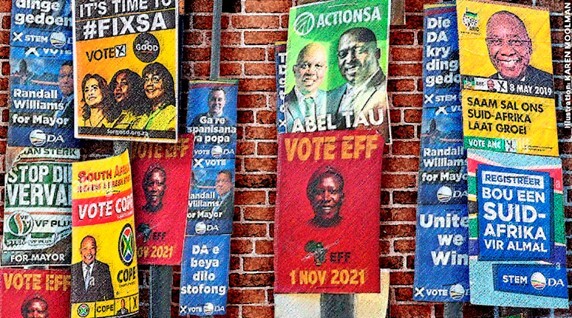
SA’s market performance in Q2 2024 notably surged towards the latter part of the quarter, driven by sentiments around the National and Provincial Elections (NPEs) in May and the subsequent conclusion of the new South African government in June. Despite market expectations that the leading party, African National Congress (ANC), would secure a much higher vote share which would enable them to form a coalition with smaller parties, the ANC received only 40.2% of the voter count. This unexpected outcome was seen as a pivotal moment for South Africa’s political landscape, leading to the formation of a new Government of National Unity (GNU).

Picture
Figure 2: The new government of national unity (GNU) cabinet, source: South African Presidency.

The Johannesburg Stock Exchange (JSE) benefited from the political stability brought about by the GNU, comprising the ANC and nine other parties, formed after two weeks of intense negotiations. This coalition was seen as a market-friendly development, fostering perceptions of continuity in economic and government policies while emphasizing accountability and transparency. This outcome contributed to the strengthening of the Rand, which appreciated by approximately 3.3% against the US Dollar in June, ending the first half of 2024 as one of the few major currencies to appreciate against the Dollar year-to-date. However, this strength in the local currency negatively impacted JSE-listed stocks with foreign earnings.

The South African Reserve Bank (SARB) maintained the base lending rate at 8.25% for the quarter, reflecting its strong focus on curbing inflation. May’s CPI remained at 5.2% y/y, barely lower than the 5.3% y/y at the start of the year, and still well above the target of 4.5%, highlighting persistent inflationary pressures. Even with some relief from reduced load-shedding, the economy showed little improvement, with Q1 2024 GDP growth dipping slightly to -0.1% from a revised 0.3% in Q4 2023. Nonetheless, the SARB stood by its growth predictions of 1.2% for 2024 and 1.3% for 2025.

​Sectoral Insights

Retail Sector

The retail property sector in South Africa showed resilience during the second quarter of 2024 despite ongoing economic challenges. The MSCI South Africa Quarterly Retail Trading Density Index reported an annualized trading density of R41,053 per square meter for the year ending March 2024, reflecting a 6.2% year-on-year growth. This growth is notable given the high inflation, elevated interest rates, and unemployment rates impacting consumer disposable income. However, reduced load-shedding and improved sentiment kept consumers visiting shopping centers. Foot traffic in major shopping malls increased in the first quarter of 2024, though spending did not match the rise in visitor numbers.

Vacancy rates in retail properties decreased to 4.4% by March 2024, indicating recovery and stability. Smaller regional centers (25,000-50,000 square meters) saw vacancy rates fall from 5.8% to 5.1%, while community shopping centers experienced slight upward pressure since November. Larger formats like regional and super regional shopping centers exhibited mixed performance, maintaining vacancy rates lower than the peaks of 2021 and 2022 but showing some deterioration since December 2023. Retailers’ cost of occupancy improved as sales growth outpaced rental growth, making the sector more attractive for investment. The retail property sector’s resilience, amid economic challenges, suggests potential growth, particularly if interest rates decrease and retirement fund proceeds support consumer spending.

Picture
Figure 3: retail vacancy rates, source: SAPOA

Office Sector

In the second quarter of 2024, South Africa’s office property market continued to recover gradually. The SAPOA Office Vacancy Survey reported an overall vacancy rate decline to 14.2%, down 50 basis points from the previous quarter, marking the eighth consecutive quarter of decreasing vacancies. A slight rebound in office asking rents, with a 0.8% increase, indicates a closer alignment of demand and supply, aided by subdued development activity.

Regional disparities remain significant. Johannesburg faced challenges with a 16.9% vacancy rate, while Cape Town maintained the lowest rate at 6.3%, showing resilience and attractiveness to tenants. The high pre-let rate of new developments, such as the Nexus Waterfall project by Attacq, reflects cautious development practices, ensuring occupancy before construction.

Picture
Figure 4: Nexus Waterfall construction site, building 2, source: Attacq website

Despite these improvements, the office market still contends with troubled assets, particularly buildings with over 30% vacancy rates. These assets, difficult to fill, can depress rental rates and complicate market dynamics, especially if sold to opportunistic buyers.

Industrial Sector

The industrial property market, particularly within the logistics sector, demonstrated resilience and growth in the second quarter of 2024. Despite rising building costs, strong structural drivers such as supply chain optimization, onshoring, and e-commerce expansion supported the sector. Rental reversion trends were notable, with Equites Property Fund reporting an anticipated average rental reversion of -18%, reflecting adjustments from historically high rates rather than a market decline. Growthpoint Properties and SA Corporate Real Estate reported improvements in rental reversions, indicating a stabilizing market. Prime market rentals increased from approximately R65/m² to around R85/m², reflecting strong demand and limited supply. The demand for logistics spaces, driven by supply chain needs and e-commerce growth, suggests a healthy and expanding market, pointing to further improvements in market rentals and sector stability.

South African property fundamentals have been navigating a complex economic landscape with varying degrees of resilience and recovery. The retail sector benefits from stable foot traffic and improved occupancy, while the office sector shows gradual recovery with regional disparities. Meanwhile, the industrial sector thrives on strong structural demand. Continued strategic management and adaptation will be crucial for sustained growth and stability across these sectors.

Picture
Figure 5: Eastport Logistics Park, source: Fortress Fund Website

Investment Insights: How Bond Yields Influence Property Valuations

Have you ever wondered how the rise and fall of bond yields can affect the value of property investments? in this section, we’ll break down this relationship, helping you make more informed decisions. The bond ad property markets are closely linked, offering investors unique opportunities to balance income and risk. Understanding how bond yields influence property valuations is crucial for making informed investment choices.

Government bond yields, representing the risk-free rate, serve as a benchmark for the returns expected from the least risky assets. Consequently, for riskier investments like listed property, investors demand returns that exceed the risk-free rate to account for risks such as tenant risk, leverage, and capital allocation. In recent years, as interest rates have risen, bond yields have increased, enhancing their appeal and putting pressure on riskier assets like listed property.

Picture
Figure 6: The Union Buildings, Pretoria, source: South African Presidency

 For South African investors, understanding these dynamics is critical. Recently, South African bonds faced challenges due to the economic downturn following the COVID-19 pandemic, and bond yields rose as a result of increased government borrowing. Yields were also impacted by rising interest rates, geopolitical issues, and a worsening trade balance, all of which eroded investor confidence. Despite these challenges, South African government bonds included a significant risk premium, pushing yields higher. After peaking at 12.8% in April, long bond yields rallied toward the quarter’s end, falling 81 basis points to 11.2%, driven by optimism around the multi-party coalition and a global rally.

Given the attractive starting yields on bonds both locally and globally, we expect the property market to benefit from potentially decreasing yields as we transition into a lower interest rate environment. South African investors should remain vigilant, as understanding and anticipating these yield dynamics will be key to making informed property investment decisions in the coming months.

Outlook

The strong performance of the South African listed property sector in Q2 2024, highlighted by a 5.7% increase in the FTSE/JSE All Property Index (ALPI), underscores the sector’s resilience and growth potential. This outperformance, coupled with a 9.4% year-to-date gain, positions listed property as a leading asset class within the domestic market, outperforming both global property indices and broader equities.

As we look ahead to Q3 and the remainder of 2024, the sector seems poised for continued growth. Property fundamentals are showing improvement. The formation of a Government of National Unity (GNU) and the stabilization of the political landscape have bolstered investor confidence, contributing to a strengthening Rand and positive market sentiment. The anticipated transition into a lower interest rate environment further supports our positive outlook, as decreasing yields are likely to enhance the attractiveness of property investments compared to other asset classes and strengthen valuations.

In conclusion, while the South African listed property sector is well-positioned for continued success, as investors we will remain mindful of potential market volatility due to upcoming geopolitical events, including the U.S. elections. Nonetheless, the sector’s strong fundamentals and strategic developments support a positive outlook for the remainder of the year. Given the current market conditions, investors may want to consider increasing their exposure to listed property, taking advantage of the sector’s resilience and growth potential. We maintain a positive sentiment towards this asset class, anticipating further gains as the year progresses.

We ask you to be safe and feel free to contact us with any questions and we appreciate your support and confidence in us, in being able to manage your wealth.

Picture
Zinhle Busisiwe Simelane is an integral part of our team at MSM Property Fund, serving as the Listed Property Analyst. With a solid foundation established as an Asset Management Intern at Emira Property Fund, she refined her skills in research and analysis. Transitioning to Afrifocus Securities, Zinhle excelled as an Equity Research Analyst, specializing in JSE-listed property companies. Armed with a BSc in Property Studies from the University of Witwatersrand and currently in pursuit to be a Chartered Financial Analyst (CFA) Charterholder as a CFA Level 2 candidate, Zinhle’s dedication to excellence is evident. Her expertise enhances our capabilities in constructing our portfolio, driving us toward continued success in the property investment landscape.

MSM Property Quarterly Newsletter Q1: Keeping up the momentum from the 2023 rally!

DEAR INVESTOR,

We break our silence with a quarterly update on listed property as it was the best listed asset class on the Johannesburg Stock Exchange in 2023 with just over 10% in total return perspective. Zinhle Simelane, our listed property analyst,  covers the first quarter and the sectors prospects.

This will be posted on our app for the mobile version. To get the latest information regarding property minute by minute, please follow us on Twitter (@MSMProperty) and for property in all of its form, follow us on Instagram (@msmproperty)

The Listed Property Review for Q1 2024

Introduction

In the first quarter of 2024 the growth of the property market slowed down compared to the strong performance we saw from November 2023 to January 2024. Despite this slowdown, the listed property sector is still doing better than other asset classes so far this year. Listed property performance, shown by the JSE All Property Index (ALPI), went up by 3.5%. On the other hand, the JSE All Share Index (ALSI) dropped by -2.2%, the JSE All Bond Index (ALBI) dropped by -1.9%, and cash investments increased by 2.1% in Q1 2024.

However, the good news were dampened by some negative changes we saw, especially in March. During that time, the property market returns went down by -0.6%. This might be because investors started thinking differently about whether interest rates would go down soon and also because of how well property companies did in their financial reports for the first quarter of 2024. Some companies, like Growthpoint Properties and Hyprop Property, didn’t do as well. Their distributable income per share (being profits made from rentals) decreased significantly. But companies like Vukile Property and Attacq, which expected to do better in the financial year 2024, saw their share prices go up instead.

Picture
Figure 1: Asset Class Returns In Real Terms; source: Old Mutual Investment Group

Operationally, the commercial real estate sector is getting more stable, but there’s still worry about how much money companies can make due to them spending on finance costs. The markets in general are hoping that the central bank will cut interest rates a lot later this year, which could help ease this pressure. Most businesses are already expecting these rate cuts to happen in the second half of the year.

But there are other problems hanging over the property market, especially with the general elections coming up in May in South Africa. If there are big changes in politics, it could make markets more uncertain for policies, especially if there’s a chance of a coalition government or if new parties, like the MK Party led by former president Jacob Zuma, become popular. Furthermore, local challenges such as social unrest, infrastructure deficiencies, and global geopolitical events may hamper growth prospects. Despite this, there is some optimism with loadshedding having subsided in the current year to date and meaningful discussions being had for the restoration of Transnet. These SOEs (state owned entities) have a significant impact on the health of the South African economy to bolster growth and employment. Sustainability is increasingly becoming a focal point in real estate investment decisions. Strategic investments in solar and water assets, coupled with a focus on environmental, social, and governance (ESG) factors, are anticipated to enhance property values over the long term and ensure no interruptions in the short term for their tenants.

Picture
Figure 2: Illustration by Karen Moolman

Financial Results at end of April

Recent financial results were mixed, influenced notably by economic factors like rising funding costs and constrained liquidity. The distinct differences in performance observed within the listed property sector last year persisted into this year. In the previous year, we saw a prevailing pattern where certain companies, such as Attacq, Fortress, and Shaftesbury Capital, experienced notable growth due to corporate actions such as mergers etc, alongside a resurgence in offshore property companies like London-focused Shaftesbury Capital and European retail property firms, which saw a rebound from the 2022 sell-off. Conversely, South African-based property firms like Growthpoint and Equites faced challenges, reporting negative earnings outlooks attributed to higher financing costs, resulting in underperformance.

In the first quarter of 2024, this trend of performance divergence continued, primarily driven by differing outlooks on earnings growth. Companies maintaining a negative outlook on earnings, including Growthpoint (-3.6% in Q1), Equites (-8.5% in Q1), and Hyprop (-5.6% in Q1), saw negative returns. Conversely, companies able to report increased growth expectations and revise earnings guidance upwards due to strong operational performance and effective balance sheet management, such as Attacq (+15.7% in Q1), Vukile (+7.5% in Q1), and Nepi RockCastle (+7.7% in Q1), continued to enjoy positive returns.

Picture
Figure 3: JSE ALPI Returns for Q1 2024, source: IRESS

The recent earnings season showed that the property fundamentals are improving with stabilizing vacancies across subsectors, improving reversions, and valuation write-downs bottoming out offer some cause for optimism. Vacancy rates have decreased across all sectors, with retail and industrial sectors showing significant improvements. Due to muted development activity, the office sector has also experienced an improvement in vacancies, with the vacancy rate down from a peak of 16.7% to 14.7% in Q1 according to SAPOA. Financially, property companies maintain a stable yet relatively high aggregated Loan-to-Value (LTV) ratio, suggesting manageable debt levels despite some decline in asset valuations. The LTV across the sector improved to 39.6% for December 2023 but remains at the upper end of its long-term history. However, in the midst of the macroeconomic and geopolitical landscape, the quality of management teams and portfolios will be the primary driver of performance divergence and will play a crucial role in determining which companies outperform.

Sectoral Insights

Despite challenges, certain property sectors exhibit resilience and growth potential. However, some subsectors performed better than others. Industrial and neighbourhood retail sectors remain strong performers, driven by factors like e-commerce growth and reshoring trends. In contrast, the office sector continues to face challenges with weak demand, although quality assets in prime locations are expected to fare better. Residential properties, particularly those in municipalities with good infrastructure and security, are expected to benefit from the semigration trend. However, the impact of interest rate changes on the residential sector remains a concern.

Retail Sector

Recent developments in the retail sector signify a notable turnaround for shopping center owners, who have weathered a difficult period marked by the pandemic, social unrest, and economic strains. This led to retail vacancies reaching a peak of 7.2% in March 2021 as reported by the MSCI South Africa Retail Trading Density Index. To date, there has been significant improvement in the sector, with vacancies dropping to 4.5% in the final quarter of 2023, this decline suggests absorption of excess supply.  While the sector is still experiencing signs of oversupply, there has been limited new developments of shopping centres and this will bode well for the sector.

The release of encouraging trading metrics by leading real estate investment trusts (REITs) indicates a resurgence in activity, with sales turnover on the rise, foot traffic increasing, and vacancy rates declining across various mall portfolios. Noteworthy performers such as Attacq and Fortress exemplify this trend, showcasing resilience and adaptability in navigating the shifting landscape, with properties like Mall of Africa and Fortress’s diverse non-urban shopping centre holdings demonstrating robust performance amidst challenging circumstances.

Picture
Figure 4: Jabulani Mall, source: Vukile Property Fund Website
Picture
Figure 5: Mall of Africa, source: Attacq Property Fund Website

Additionally, retailers’ expenses for renting or owning their stores were the lowest they’ve been in almost ten years, represented by the cost of occupancy at 6.8% in Q4 2023, according to SAPOA. When these expenses are lower, it means property companies can make more money, draw in more tenants, and do better against their competition. This positive development has been fuelled by robust tenant sales growth outpacing rental growth, resulting in improved occupancy cost ratios and reduced average vacancies. So, because of this, landlords have more power when they’re talking about leasing agreements, which means they can negotiate better deals for themselves. With more landlords achieving better rentals for their retail spaces, it looks like the retail industry is getting better, despite ongoing economic problems. But there’s a twist to this story with Pick ‘n Pay (PnP), one of South Africa’s big food stores, facing difficulties lately. They’re struggling to keep up with other strong competitors in the market and haven’t been investing enough in making customers happy. Because of this, they haven’t been doing as well as their competitors in the last five years. On the other hand, stores like Shoprite have been getting popular because they’re appealing to customers , especially during tough financial times. People are spending less and choosing cheaper brands, which is hurting stores like PnP. This worries landlords who have PnP stores in their buildings, especially after what happened with Edcon’s financial problems impacting the retail sector.

Picture
Figure 6: Pick ‘n Pay store, source: Business Live

While exposure to the retailer could lead to potential outcomes such as lease cancellations, downsizing of retail space, rental concessions, and write-offs of arrears, landlords do not seem too worried about the retailer in their portfolio. This nuanced backdrop underscores the intricate interplay between retail dynamics, consumer behaviour, and the broader economic landscape, shaping the trajectory of mall owners and retailers alike in the South African market and furthers the move towards non-discretionary spend retail which we believe will maintain resilience in a tough economy.

Office Sector

During the first quarter of 2024, the South African office market continued to confront challenges stemming from the prolonged impact of the COVID-19 pandemic and most recently the low economic growth environment. However, there have been signs of improvement, with SAPOA reporting national vacancies at the end of Q1 20204 being on a downward trend at 14.7% after peaking at 16.7% in 2022. The shift in vacancy rates was largely driven by a combination of the increased take-up in the A-grade office and improvement in the older C-grade offices as a result of some of the vacant offices being converted to residential or other uses.

Picture

The ongoing evolution of workplace dynamics, including the increasing acceptance of remote or hybrid work models, continued to shape tenant demand, with implications for office space utilization and occupancy levels. But even with these challenges, there are chances for office buildings in great locations with modern features to attract tenants who want flexible and collaborative workspaces.

Developers are being careful because business growth and confidence aren’t strong, so they’re not building many new office spaces unless tenants really need them. Also, office rents are staying low, with landlords often not making as much money when leases renew, and overall rents not going up much. We’re not expecting big improvements right away, but there are some signs of hope, like more demand for high-quality spaces and not too many new offices being built, which could make the office market better.

Industrial Sector

The industrial property sector maintained its resilience throughout the first quarter of 2024, buoyed by a robust combination of factors including the continued expansion of e-commerce, reshoring trends, and limited land supply. These long-term demand drivers, alongside inelastic land availability, contributed to a steady growth trajectory in rental rates. The sector also continues to have the lowest vacancy rates comparably, with the sector having an average of 2.5%.  Yet, there are difficulties arising from higher costs to borrow money and having assets that don’t bring in much profit, which might lower the value of industrial properties. But even with these challenges, industrial properties still look attractive to investors because they can generate a lot of cash and there’s good demand for them compared to how many are available in terms of supply. Although concerns about borrowing costs and property values continue, the basic strengths of the industrial sector are still strong, giving investors chances to make steady profits in a changing market. Against this backdrop, the industrial sector, constituting 12% of the MSCI index, sustained its relative outperformance with a commendable return of 11.2% during the period. Low vacancy rates and a surge in tenant-driven developments continued to bolster the sector’s performance, with the logistics sector, part of the industrial sector, is doing especially well because there’s a lot of focus on making supply chains work better and bringing operations closer to home. Also, because of tensions between countries, it’s become even more important for businesses to have safe and modern facilities, which have increased the demand for these spaces. In the future, things look good for the industrial sector because there aren’t many empty buildings, building costs are going up, which might raise rent prices, and there’s still a lot of interest in high-quality properties despite changes in the market.

Picture
Figure 8: Eastport Logistics Park, source: Fortress Fund Website

Alternative Property

The South African alternative property sector showcased a mixed performance in the first quarter of 2024, with various subsectors experiencing distinct trends. Despite some difficulties like higher interest rates and inflation, the residential sector stayed strong, especially in places with good infrastructure and safety. People still want to live in residential areas, although there were worries about how interest rate changes might affect the sector later on. Some companies were smart and invested in solar power and water systems to help manage their costs better and follow the trend towards sustainability. Other parts of the alternative property sector, such as storage and data centres, also looked like good places to invest money because more people needed storage and businesses wanted better digital systems. Investments in data centres, for example, were expected to make a lot more money because businesses care a lot about keeping their data safe and having systems that can grow with them. Similarly, self-storage businesses were doing well because people needed flexible storage options. Overall, healthcare, student housing, and data centres were getting a lot of attention from investors because they seemed safer than regular commercial real estate. Healthcare especially looked promising, even though it’s still new and there aren’t many good investment options yet. Getting money for these new kinds of investments could be tricky at first, but as they become more popular, it should get easier to invest directly in them.

Picture
Figure 9: Vantage Data Center Midrand, source: Data Center Dynamics Website

Outlook

Looking ahead to the rest of 2024, there’s cautious hope in South Africa’s property market, especially if interest rates might go down towards the end of the year. The sector seems like a good bet for investors, with expected modest growth in the near future and potentially good returns of 12% to 15% each year in the long run. Preference is directed towards defensively positioned companies in the retail and alternative subsectors, with a geographical inclination towards Central Eastern Europe over Western Europe, highlighting strategic considerations amidst evolving market dynamics.

Looking forward, South Africa’s property market seems to be improving slowly, thanks to some positive signs in the economy and in the property industry itself. But there are still big issues, both globally and locally; so, people need to be smart and keep up with what’s happening. Even though there are challenges, such as problems related to environmental, social, and governance issues, and complicated structures, making wise investment choices can help take advantage of properties that are currently undervalued and set investors up for long-term success. As we transition from an era where macroeconomic factors, like government policies, held much importance to one where the performance of individual companies takes center stage, we can expect a shift in the dynamics of the market. This shift will likely manifest in how investments in property shares respond to global events and trends over the course of the year.

We ask you to be safe and feel free to contact us with any questions and we appreciate your support and confidence in us, in being able to manage your wealth.

Picture
Zinhle Busisiwe Simelane is an integral part of our team at MSM Property Fund, serving as the Listed Property Analyst. With a solid foundation established as an Asset Management Intern at Emira Property Fund, she refined her skills in research and analysis. Transitioning to Afrifocus Securities, Zinhle excelled as an Equity Research Analyst, specializing in JSE-listed property companies. Armed with a BSc in Property Studies from the University of Witwatersrand and currently in pursuit to be a Chartered Financial Analyst (CFA) Charterholder as a CFA Level 2 candidate, Zinhle’s dedication to excellence is evident. Her expertise enhances our capabilities in constructing our portfolio, driving us toward continued success in the property investment landscape.

MSM Property Monthly: Goodbye 2021

DEAR INVESTOR,

To get the latest information regarding property minute by minute, please follow us on Twitter (@MSMProperty) and for property in all of its form, follow us on Instagram (@msmproperty)

As we say Goodbye to an eventful year, we look forward a refreshing 2022. With next months newsletter, we shall go through out 2021 report card and make predictions for the coming year, so don’t miss it!

Highlights:​​

  • Listed Property up 27%, Year-to-Date
  • General Equities up 30%, Year-to-Date

Performance

We fell behind the index due to our portfolio being in a defense stance and changing of it to risk-on, resulting in the listed property portfolio being up 1.47% versus the All Property Index finishing the month of November off at 2.17%. For the year-to-date performance (1st January to 30th November 2021), the listed property portfolio is up 27.3% whilst the general equities portfolio is up 30% versus the All Share index benchmark at 24%. If you had your money in cash (typically fixed deposit), you would have only earned at best 6% pre-tax with official inflation rate being at 5.5% which automatically pushes you into negative real growth (-1%) of capital. This means that you would have technically lost money due to placing it in cash and not investing. Hence why Ray Dalio, a now famous American investor billionaire, states that “Cash is trash” when central banks have increased money supply thereby increasing inflation which lessens your buying power. Instead, one should invest it and cash is only critical once in every 8-10 years, typically during a crash, which should be used to buy more inflation beating assets.

Picture

Global Market Themes

The increased amount of monetary stimulus in America’s economy has been a source of contention as the markets have pressured the Federal Reserve to increase interest rates, due to inflation being at 6.2% Even so, Jeremy Powell, who was re-elected by Joe Biden turned hawkish and announced tapering of $15bn worth of bonds for the month of November and December each but did not increase interest rates. Even with unemployment being as low as 4.2% and 604k jobs being created during October beating expectations, the Fed still seeks full employment and will start to increase interest rates in 2022. Some economists have predicted that there will be 3 interest rate hikes so that the Fed can gain control of the runaway inflation. The emergence of the Omicron variant, discovered by South African scientist set global markets for a correction but bounced back as more data came out regarding hospitalizations, leaving the markets down by 2.2%.

Picture

The Eurozone and UK regions followed suit as markets dropped with the STOXX All Europe down by 2.8%, and the UK imposing travel bans on South Africa and other southern African countries even though Omicron was found to be first identified in Europe and the UK fairing much worse in terms of cases and hospitalizations. The Eurozone saw mixed economic data and witnessed a surge in Covid cases as the region went into winter. The discovery of Omicron also put the ECB on the back foot with increasing interest rates as everyone assessed the new variant and its possible effects on the economy. In Asia, China saw a marked increase in Covid cases with some regions going under lockdown. The Chinese economy saw producer inflation beat estimates along with retail numbers being better than expectations. Chinese leaders also met to discuss the future of the economy for next year and the central bank of China announced cheaper funding to the banks so as to assist them with the faltering property developers such as Evergrande as the highly indebted companies are taken over by the government regulators and managed.

Picture

South African Themes

For South Africa, the low turnout for elections handed the ruling party an embarrassing loss of several municipalities as the ANC government missed the 50% threshold for majority, which had never been witnessed since the 1994 elections. Markets were then suddenly hit hard by the Omicron sell-off as South African scientists discovered the new variant with several western countries putting travel bans on the country. Nonetheless, the mid-term budget announced by the new finance minister revealed an improving fiscal situation with debt to GDP decreasing from 81.9% to 69.9% and a projected 5% increase in South Africa’s GDP for 2021. Fitch Rating Agency released positive news by increasing South Africa’s rating from negative to stable and the reserve bank increased interest rates by 25bps so as to curb the rampant inflation which came in at 5.5%

We ask you to be safe and feel free to contact us with any questions and we appreciate your support and confidence in us, in being able to manage your wealth.

MSM Property Monthly: Another 7% for YOUR wealth in August

DEAR INVESTOR,

To get the latest information regarding property minute by minute, please follow us on Twitter (@MSMProperty) and for property in all of its form, follow us on Instagram (@msmproperty)

Highlights:​​

  • Listed Property up 7%
  • Year-to-Date, up 27%
  • General Equities up 14%, Year-to-Date

Performance

August provided another growth period of 7% for your wealth in one month as listed property powered ahead, ignoring all news regarding Covid cases across the world and the high unemployment in South Africa. To date, your wealth is up 26% for the year for listed property, beating the ALL Share index. The general equities mandates are up 14%. Both have beat the ALL Share Index, which dropped by -1.7% for August and is currently up by 12.5%. Our biggest contributors to the performance was Vukile, which saw a 12.5% increase alone in one month, boosting the returns for your wealth. This year listed property is making up all of the gains that had been lost last year during the pandemic and we believe the sector will breach 30% for this year, as the market runs ahead of expectations regarding how central banks will react.

Picture

Global Market Themes

Emerging Market (EM) equities bounced back during August, with the MSCI EM Index delivering 2.6% in US Dollar (USD) terms. Developed Market (DM) equities were not far behind, as the MSCI World Index posted a solid 2.5% in USD. The S&P500 returned 3% as appetite for equities grew as investors searched for more risk assets. America’s GDP grew at 6.6% for the second quarter of 2021 as the economy maintained its recover trajectory. This was supported by the strong job data of 943K jobs being created and unemployment dropping from 5.9% to 5.4% in July. The strong demand for labour, which has become a constraint, had led to strong wage growth, adding to the inflation being witnessed. Consequently, the Federal Reserve addressed the pressure being given by market commentators on inflation, by speaking at the Jackson Hole convention and confirming that tapering will occur later in the year at current projections and that interest rates would only be increased next year. This gave markets the extra risk appetite, pushing global markets higher. Earlier in the month, the number of pandemic cases in the US saw a marked increase with some days recording 100k cases reported per day, prompting calls for booster shots. These concerns were felt through the markets as commodities came of highs with oil taking a hit. Nonetheless, President Biden pushed the $1 trillion infrastructure bill which was concluded, which will act as a support for commodity prices.

Picture

European stocks also fell off earlier in the month as Delta variant cases rose across the western world. However, the effect on Europe was less than that of the US as cases maxed out at 71 000 cases per day, stabilised due to the aggressive vaccination program. The European economy still saw growth in the second quarter, beating estimates and inflation increased to 3% in August from 2.2%. The European Central Bank, unlike the Federal Reserve in the US, will be taking a more hawkish stance as they will look to increase rates if inflation gets too high and will do it soon. Yet, the central bank does believe that current inflation rate is “transitory” due to the eurozone economy re-opening due to the lockdowns.

Picture

Emerging market equities were partly driven by events in China. The MSCI EM Index closed 2.6% higher in USD, while the MSCI China Indices closed 1% higher, lagging the rest of the world. Even though China has had to confront increased Delta cases in 14 of the 32 provinces, the main drive in the underperformance of the markets has been the Chinese regulatory crackdown (precipitated by Jack Ma’s comments) on the technology sector. As highlighted in our last newsletter, the government is regulating the sector as it believes it is of national interest in terms of data collection, the technology sector may pose a risk to the financial system through the short-term loans the sector issues and finally, the sector yields too much power with their monopolistic forces they exert on smaller technology businesses. This has put pressure on Chinese markets, and it is not yet clear as to when the crackdown will end. This has contributed to the softening of commodity prices as investors are scared that the crackdown will spread to other sectors such as construction and materials. We still believe that commodity prices in the short-term may soften but with infrastructure programs being pushed across the world, this will increase commodity prices in the long-term. Besides America and South Africa and the UK, India passed a $1.4 trillion infrastructure package which will also assist the economy in getting back on its feet.

Picture

South African Themes

In South Africa, the president moved to reshuffle his cabinet in response to the growing unease regarding the effectiveness of his administration whilst also replacing the finance minister as Tito Mboweni bows out from government. Meanwhile, Delta variant cases stabilised along with the progression of vaccination. However, vaccination rates are low due to slow uptake of the vaccines by the general population with only 20% of the population having been vaccinated. The president decreased lockdown restrictions from 4 to 3 as the number of cases decreased.  Manufacturing numbers came out at 57.9 points as opposed to 43.5 points in July, showing an expansionary recovery after the July unrest. However, the unemployment rate increased to 34.4% and with the extended definition (including those who have given up looking for work) increasing to 44%. The all share index also softened for the month at -1.7%, mainly on the back of the Naspers/Prosus transaction which saw trade of R148 billion on the Johannesburg Stock Exchange.

Picture

Property

The financial sector on the Johannesburg Stock Exchange along with the listed property sector lifted the ALL Share Index as the rest of the market decreased. Listed property was lifted by Rand local listed property companies beating the offshore component of the portfolio. Companies reported their results and the quick recovery of the sector from July’s unrest. For example, Vukile reported that they were on track to repair the damaged malls and centres without having received the insurance pay-out as yet, which takes 6-10months. Sasria also reported that so far, they had received R14bn worth of claims which they could be able to meet.

Going forward, we believe the future of listed property is bright even though there will be several changes within each of the subsectors, especially offices. With vaccination programs across the world gaining momentum and business leaders urging their employees to get back to the office, there’s hope for the office property, even though the onslaught of work-at-home has had devastating consequences. Even before the pandemic of 2020, office vacancies had been sitting at 12% across South Africa and are currently sitting at 15%, with nodes such as Sandton sitting at 22%. Nonetheless here are our viewpoints on the office market going forward:

1. Overall demand for office space

An organisation’s need for office space remains, but the way we use offices will change. While most firms and employees will not go back to pre-pandemic levels of office use, it is also unlikely they will maintain a full WFH model. It is difficult to estimate the overall impact on demand, as we see both forces that could drive an increase in demand — as well as some pressures that may reduce it.

2. Employers focus on employees

Many surveys are focused on what employees want in an office facility, and firms are adjusting plans to meet these requirements. Centrality, ease of access, and high-quality amenities are high on the list of priorities.

3. Location pressures

The shift to increased time working from home has led to discussions as to where to best locate office facilities in order to maximise connectivity.

4. Sector clusters drive demand

Growing technology firms have driven office space development in tech clusters. Across Europe, there is a likelihood of increased clustering of industries such as tech and life sciences, similar to the preponderance of tech in the Bay Area in San Francisco.

5. Flex space operators

 The growth in recent years of WeWork as a provider of flexible office and co-working spaces has thrown a spotlight on the overall provision of such facilities. This varies materially across European cities, but it remains an important factor to monitor given the likelihood of operator consolidation as this sub-sector matures.

Picture

We ask you to be safe and feel free to contact us with any questions and we appreciate your support and confidence in us, in being able to manage your wealth.

MSM Property Monthly: Half Year report-Up 20%😃

DEAR INVESTOR,

To get the latest information regarding property minute by minute, please follow us on Twitter (@MSMProperty) and for property in all of its form, follow us on Instagram (@msmproperty)

Highlights:​​

  • Listed Property up 20%
  • General Equities up 14.5%
  • Asset Under Management breach R500m

Performance

We’re officially past the midway point of the year and how time flies by, especially in these challenging and trying times. Without your support and growing base, we would not have surpassed the R500m threshold which is an important milestone in our growth as a specialized asset manager and private equity firm. We still have a long way to go but its important to celebrate the wins and with the events of the past month and the ongoing global Covid -19 crisis, one must always appreciate the good aspects of life.

Nonetheless, June saw the fund close out the half year being up 19.85% vs benchmark which was up 20% for the year, as we took profits to protect the precious gains, we had garnered during the first half of the year. We took the foot off the pedal, so to speak, so as to reassess the ever-changing world we live in and the major macro-occurrences for the portfolio, specifically because of inflation concerns which will be highlighted later. For our Equity portfolio, we were up 14.5% for the first 6 months beating benchmark (13.8%) and coming second after the listed property asset class (20.00%). Table 1 depicts the comparison between the different asset classes and the listed property and general equity performances of MSM. Even amongst the noise, we’ve been able to deliver performance for our most important clients, you!

Picture

For the outlook regarding portfolio returns, equity prices will be supported by the collective stimulus being maintained by central banks along with low interest rates. We see listed property gaining another 5%-10% by the end of 2021 and we see general equities up another 5%, with resources being the main lead for the JSE.

We believe risk assets will benefit from the glut of money in the financial system as the Fed and other central banks allow for inflation to go past their stipulated mandates. We note that many investors and many retail investors have “missed-out’’ on the buying opportunity of a decade and hence will start buying the dips that present themselves in the market. This will be supported by the continued reopening of global economies as governments across the world go ahead with re-opening regardless of what variant may be dominant as livelihoods take precedent.

When looking at our predictions for the year 2021, here is our report card on how we have fared so far:

Picture

There’s still a lot to play out yet we believe the recovery, yet we underestimated the inflation effect and how much of a factor it would play in the returns.

Global Market Themes

The American economy released good manufacturing data showing the continued recovery from the world’s largest economy. Jobs data came out positively with 556K jobs being created and we saw the unemployment rate drop down to 5.8%, from 6.1% the previous month. However, the economy is seeing supply constraints regarding the filling of jobs. The reopening of the economy with the creating of jobs has added onto transitory inflation which had become a major worry for the markets in the second quarter. The Federal Reserve had noted the increased inflation and would allow for it to go beyond its target of 2%. Interest rate hikes will only be hiked in 2022 and 2023 as the Federal Reserve still sees the inflation as transitory. The inflation is based on the reopening of the economy and constraints to supply chain disruptions rather than too much money in the system due to injection of cash within the economy. Hence the reflation trade will be allowed to carry on for the rest of this year. This will be good for equities and we expect to see more funds come into the market as the Federal Reserve has given the go ahead on the inflation worry, which dominated returns for the second quarter of this year. Inflation is expected to breach 2% and oil will add onto this as the commodity passes $70 per barrel as the Saudi’s in OPEC maintain control of the production of oil barrels for the world.

Picture

The European Central Bank has followed the lead of the Federal Reserve in the US with a delayed move on inflation as they also believe that inflation is only transitory. The European Central Bank has maintained its inflation of 2% as the Eurozone area sees a stable but fragile economic recovery (see table of central bank responses globally). Retail sales for the area beat expectations as business confidence along with purchase managers index beat expectations. The roll out of the vaccinations continues and the Eurozone approved vaccine passports. Of concern has been the UK’s infection rates which have begun to rise sharply as the Delta variant has spread, even with high vaccination rates.

Picture

Unlike the UK, China has seen slight increases in infection rates and the government has to curbed the spread by acting quickly. The same tight grip was also seen the technology industry being scrutinized as the government has increased regulations, imposing fines on big technology companies. The regulations were sparked by the infamous speech of Jack Ma, the founder of Alibaba, who criticized the government on several issues regarding the sectors’ regulation. This sparked a total review of the technology sector by the government and three factors became apparent regarding the government’s move:

  1. China seeks to regulate the financial system as big technology firms have been paying out loans, not on their balance sheets, but on banks’ balance sheets that have partnered with the technology company’s platforms, there not taking any risk. If there’s a default on these loans, that puts systemic risk on the financial system and not technology companies.
  2. The regulation of data collection has become imperative as the government sees data as a factor of production. The vast data points collected on citizens has given technology companies unquantifiable amounts on data and hence patterns on Chinese citizens and hence power. This amount of power cannot be privately owned and is of national interest as the listing of some of these Chinese companies on foreign exchanges essentially allows foreign shareholders to have access to Chinese citizen data.
  3. The amount of power gained over the years by the technology companies can be used to exploit consumers and prevent market competition. Case in point is how Facebook was implicated in interfering with the elections of the USA and has yet to be punished accordingly. The Chinese government doesn’t want that much power to be in the hands of technology firms, especially when some of them list offshore in different jurisdictions posing as a threat to national security.
Picture

The clampdown has resulted in technology companies suffering with Tencent down in excess of 20% on the Hang Seng Index year-to-date. Naspers/Prosus has a large stake in Tencent and being one of our largest positions in the general equities, is also down 30% for the year following the clampdown. It does seem as though the noise is dying down, but global investors are still very jittery. Nonetheless, the Chinese economy has powered ahead with GDP projections still at 8% for 2021 even though inflation has begun to decrease. The government went on to inject $154bn into the economy to provide more liquidity. This will maintain good credit conditions for manufacturers such as those in the commodities sector, thereby maintaining the commodities boom for countries such as South Africa.

South African Themes

Economically, South Africa continued its recovery seen by car sales being up 20% year-on-year for June. The economy reported a GDP increase of 1.1% for the first quarter, translating to 4.6% versus expectations of 3.2% for the year. We saw the current account surplus sit at 5% of GDP, much higher than anticipated at 3% mainly driven by the resources sector due to the exporting of commodities, and business confidence rose to 97% versus the 94.7% for June. However, July confirmed that the recovery is not being felt by all as we saw unemployment numbers increase to decade year highs at 34% as Covid restrictions were being increased due to the third wave of the pandemic, spurred on by the Delta variant. All of these factors created the perfect conditions for unrest in the country and all it needed was a spark.

That political spark was provided when former President Jacob Zuma was arrested for contempt of court and sentenced to 15 months in jail. Jacob Zuma handed himself in peacefully. But that triggered riots in KwaZulu/Natal that spread to Gauteng. For a week, the looting and unrest carried on as the authorities tried to get a handle on the situation and eventually 2500 military personnel were deployed to calm the situation. The Rand weakened as a result of the riots and the JSE saw its first month of negative returns for 2021. The miners assisted in decreasing the downward movement just before the month closed out, managers saw an opportunity to buy more shares, especially in the property sector.

Picture

Property

The table below summarizes the property companies that had reported on the damage suffered during the extensive riots, looting and vandalism experienced over the week. At the beginning of the week, the benchmark (All Property-J803) was up 3.37% and by the 14/07/2021, the index was down-4.74%, with our portfolio being down -4%. When describing the nature of the impact of the riots, KwaZulu/Natal properties suffered the more extensive damage than Gauteng.

Property Company

Property Sector

No. of Properties Affected

Positioning in Portfolio

SA Corp Real Estate

Urban Retail

  • 4 KZN
  • 7 Gauteng

Underweight Benchmark (2.3%)

Resilient

Rural and Township Retail

  • 2 Gauteng

In line with Benchmark (7.5%)

Vukile

Rural & Township Retail

  • 4 KZN
  • 2 Gauteng

Overweight Benchmark (4.5%)

Dipula

Township& Urban Retail

  • 2 KZN
  • 10 Gauteng

No Holdings;

Benchmark (0%)

Arrowhead

Urban & Township Retail

  • 3 KZN
  • 1 Mpumalanga
  • 1 Gauteng

No Holdings; Benchmark (1.4%)

Less than 20% of our portfolio and the benchmark has been affected by the riots. Vukile had the largest exposure with less than 20% of Vukiles’ entire portfolio being impacted by the riots. Rural and township properties were more affected than urban properties. Over the last 500 days of lockdown during the pandemic, we witnessed rural and township properties being more resilient during the pandemic and thereby recovered quicker than the urban malls and centers, as Navigares’ research depicts on the graph below. Hence we anticipate that this trend will be assert itself again.

Picture

Outlook

We made no moves in terms of the portfolio yet monitored the situation closely. The impact on the portfolio, being less than 20%, didn’t warrant for us to make any changes.

However, we see opportunity for urban properties, in the destruction of township and rural properties as communities seek alternatives for their needs. We anticipate that urban malls will benefit from the situation along with those malls which weren’t affected. As well, the disruption of the supply chain in terms of goods will benefit properties which weren’t destroyed during the riots. This was seen with Fourways Mall in Johannesburg, operated by Accelerate Property Fund, as shoppers did their panic buying due to the anticipated shortage of goods caused by the riots.  The picture below shows the estimated damage by the riots, which will mainly be covered by insurance and Sasria and other insurance companies having declared that they have the balance sheet to meet the anticipated claims, supported by government.

Picture

We ask you to be safe and feel free to contact us with any questions and we appreciate your support and confidence in us, in being able to manage your wealth.