



Before all else, a note from our Founder & CEO
In our revised third quarter update on the sector, we look to improve our communication with you, our Investor. Read on for more information on how the recent uplift of the listed property sector is doing, after the elections held earlier in the year. Zinhle paints a picture of a sector that is growing and maintaining the gains it has made earlier in the year. Enjoy.

Musi Skosana
The South African Listed Property Sector: Navigating Global Recovery and Local Opportunities
The third quarter of 2024 was a notable period of adjustment for both global and South African markets. For investors in South African listed property, there was a mix of cautious optimism as central banks turned to more supportive policies after an extended period of restrictive policies reflected by high interest rates, while issues like geopolitical tensions and inflation continued to influence the landscape.
In South Africa, the market held up well and the listed property sector emerged as the outperforming sector on the Johannesburg Stock Exchange. The FTSE/JSE All Share Index, which tracks the performance of companies listed on the Johannesburg Stock Exchange, grew by 9.6% in the third quarter, adding to a 16% gain for the year so far. This rise was supported by increased political stability after recent elections and growing investor confidence. Listed property stocks had their best quarter this year, gaining 19.1%, followed closely by the Financials sector. Here, we’ll dive into a straightforward overview of how things went in Q3, including key economic trends, sector performance, and what to expect moving forward.
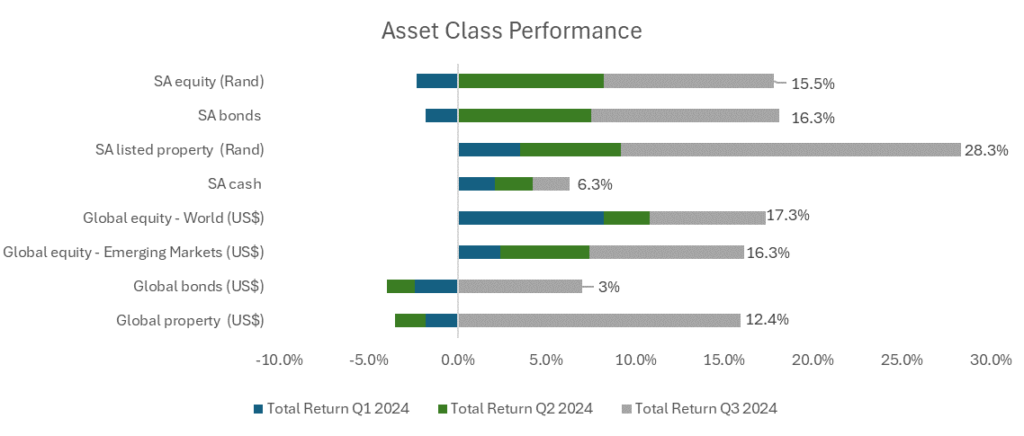
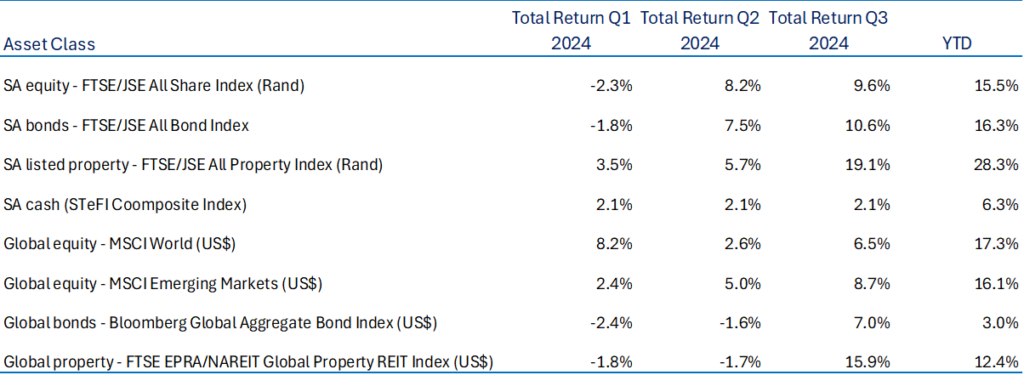
Figure 1: Q3 2024 Returns, source: Bloomberg
Global Macro Context and Market Trends
The global economy has been seeing some big changes, with major central banks across the globe stepping in to try and boost economic growth. In the U.S., the Federal Reserve cut interest rates by 0.5% in September, shifting away from strict policies to encourage more economic activity and support the labour market while working on bringing inflation down to its 2% target. The FED cited the reason for cutting rates was to ensure a “soft landing” for the U.S. economy by avoiding a potential recession as a result of the higher for longer interest rates. This gave a positive lift to stock markets: the S&P 500, which tracks 500 of the biggest U.S. companies, rose by 2.0%, and the Nasdaq, known for tech stocks, went up by 2.7% during the quarter. These gains added to a 1.9% rise in the MSCI World Index, which reflects the general mood in global markets reacted positive to the central bank developments.

In Asia, the Chinese government launched a huge $325 billion stimulus package to address ongoing economic challenges, including a prolonged property market downturn and weak consumer spending, was aimed to support state banks, stimulate the struggling property sector and boost domestic consumption. This package, which is
the largest since the global financial crisis,
caused the Shanghai Composite—a key index showing how Chinese companies are doing—to jump by 17.4% in just one month. This move was aimed at fighting deflation and helping China’s heavily indebted property sector. While it created some short-term optimism, there are still questions about whether China’s debt-driven growth can hold up over time and the ability for China to meet its economic growth target of 5% GDP growth for the year.
Commodities reflected these shifts too: Brent crude oil prices dropped by 8.9% in September driven by fears of reduced oil consumptions on the back of weakening global economic indicators despite supply concerns over the Middle East war, while both gold and iron ore made a 5.2% comeback, largely due to China’s industrial demand. Price recovery in gold as a safe-haven asset was also as a result of uncertainties in the global economy. Property markets around the world showed mixed results: while lower rates boosted real estate in the U.S. and Europe, Japan and China still faced challenges, showing that recovery varies widely across regions.
Watching these indexes, like the S&P 500 in the U.S. or the Shanghai Composite in China, can give a snapshot of each region’s economic health and how they’re responding to policy changes. They help simplify what’s happening in the market and show how different economies react to global trends.
South Africa’s Market Dynamics and Property Sector Resilience
South Africa’s economy has shown a solid response to recent positive? changes, influenced by both local and international factors. The FTSE/JSE All Share Index, which reflects the performance of companies on the Johannesburg Stock Exchange, climbed 9.6% in the third quarter, contributing to a year-to-date gain of 16%. This growth was bolstered by increased political stability following the recent elections and a rise in investor confidence.

Notably, the listed property sector had its strongest quarter this year, surging 19.1%,
with the Financials sector not far behind. Both of these sectors tend to be sensitive to interest rates, making the recent 0.25% rate cut by the South African Reserve Bank (SARB)—its first since 2020—particularly significant. Although this cut was smaller than the one made by the U.S. Federal Reserve, it was welcomed by the market, increasing demand for listed properties and lowering borrowing costs for businesses. This came after the inflation numbers in September printed a 3.8% year-on-year change, reflecting a continued disinflationary trend and comfortable within the SARB’s 3-6% inflation target.

Figure 2: SA inflation, YoY % change, source: Anchor Stockbrokers
The South African rand also saw a boost,
strengthening to R17.26 per U.S. dollar, marking a 6.3% increase for the year.
This currency stability, combined with improved bond yields (now at around 10%), created a supportive environment for both consumers and businesses, which in turn benefits the property market. The South African property sector continued its strong performance through the third quarter, with listed property stocks leading the way. The JSE All Property Index (ALPI) rose by 19.1% in Q3, bringing its year-to-date gains to a solid 30.3%. This impressive performance reflects growing investor confidence, as economic indicators like inflation ease, the rand strengthens, and property companies show stronger financial health.
SECTOR-SPECIFIC PERFORMANCE & INSIGHTS
Retail Property Sector: Resilience Amidst Consumer Constraints
The retail property sector has shown resilience despite high interest rates and slow GDP growth, as consumers have adapted their shopping habits. According to the MSCI South Africa Retail Trading Density Index, which collects retail data and tracks the average turnover per square meter for shopping centre landlords across South African, retail trading activity rose by 5.3% year-over-year through June 2024. This growth reflects how well consumers are adjusting to economic challenges while continuing to shop.
Different types of retail spaces showed varying results, highlighting shifting consumer priorities. Large malls, like Super Regional and Regional malls, saw a steady 4.7% growth in average trading density (ATD), which measure the revenue generated by tenants per square meter of retail space rented. The larger shopping centres benefited from discretionary spending and their appeal as experience-focused shopping destinations as consumer confidence showed an improvement. Smaller, local centers—such as Neighborhood and Community centers—performed even better, with ATD growth of 5.9% and 5.8%, thanks to their focus on convenience and essential shopping. In contrast, Small Regional centers grew only by 4.2%, suggesting that mid-sized locations might be losing out as shoppers prefer either the larger, experience-based malls or smaller, nearby options for everyday needs.
JSE-listed property companies with investments in Central and Eastern Europe (CEE) have also benefited from economic strength and strong retail activity in those regions. Companies like NEPI Rockcastle, MAS PLC, and Hyprop have seen gains due to rising wages and tourism in CEE countries. Similarly, Vukile’s Spanish and new Portuguese properties, along with Lighthouse Properties’ focus on Southern Europe, highlight the strategic value of diversifying into international retail markets with stronger economic landscapes.

Office Sector: Stabilizing Yet Constrained by Structural Challenges
The office market has been gradually recovering, with vacancy rates dropping to 13.6%
quarter 3 2024 according to SAPOA’s latest office report, a noticeable improvement from 16.7% in 2022. High-quality office spaces (A- and P-grade) have seen stronger demand, as tenants increasingly seek modern buildings with energy-efficient features and top amenities. Cape Town stands out with the lowest vacancy rate in the country at 6.7%, compared to Johannesburg’s higher rate of 16.3%, showing how supply and demand dynamics impact regions differently.
The growth of the Business Process Outsourcing (BPO) sector in South Africa, which has reportedly added a number of jobs over the years as South Africa has gained popularity as an ideal location for global BPO companies, has boosted office demand in cities like Cape Town and Durban. Still, B-grade office spaces, which are often lower quality, older offices in less ideal locations, and certain areas face challenges due to oversupply and slow demand. Developers are taking a more cautious approach, with very few speculative projects for offices and higher percentages of pre-leased spaces, as long-term structural issues continue to shape the market’s growth.
Industrial Sector: Demand for Logistics Properties Remains Robust
The industrial and logistics property market is thriving, driven by the steady rise of e-commerce and shifts in global supply chains. High-quality logistics spaces, especially those well-placed for last-mile delivery and modern distribution centres, have performed particularly well. Property companies like Equites have invested significantly in top-tier distribution centers in South Africa and the UK, including notable sites like the Shoprite’s Canelands distribution hub.
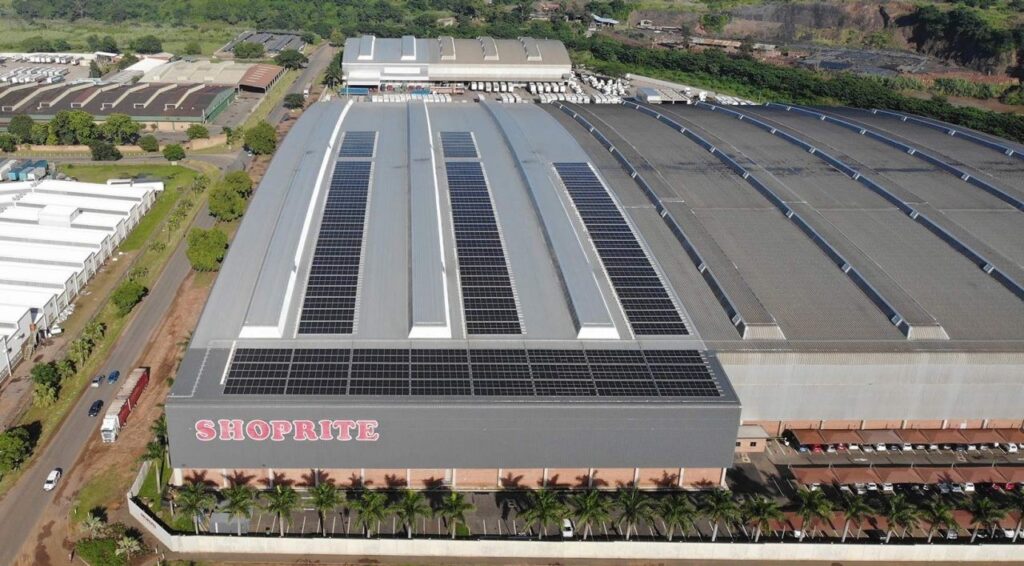
Figure 3: The Shoprite Canelands distribution centre in KwaZulu-Natal; source: Shopriteholdings.co.za
This strategic investment approach, paired with a careful eye on new developments, reflects growing confidence in the logistics property sector. The strength of this market is clear from high occupancy rates and steady rental growth, as more companies focus on expanding their warehousing and distribution capacities.
Outlook and Strategic Implications for the Listed Property Sector
As we head into the fourth quarter, South Africa’s listed property sector is in a good position to benefit from positive local and global trends. The South African Reserve Bank’s careful approach to easing interest rates, along with strong performance in local stocks and a stronger rand, supports continued investor interest in property assets. The significant reduction in loadshedding as well as the Two-Pot Retirement System are also expected to be positive effects on property.
International central banks also play a role here, as stable inflation could drive more demand for income-generating assets like property stocks. While these are promising signs, the sector still faces some challenges, like infrastructure issues, high unemployment, and rising energy costs. To keep building momentum, listed property companies will focus on high-quality properties, expanding internationally, and making smart investment choices.
In short, the third quarter of 2024 has shown both challenges and opportunities. The sector’s resilience, backed by strategic planning and strong investor support, highlights its potential. Going forward, staying adaptable and focusing on growth areas will be key to maintaining this positive trend and delivering value for investors.
We ask you to be safe and feel free to contact us with any questions and we appreciate your support and confidence in us, in being able to manage your wealth.

Zinhle Busisiwe Simelane is an integral part of our team at MSM Property Fund, serving as the Listed Property Analyst. With a solid foundation established as an Asset Management Intern at Emira Property Fund, she refined her skills in research and analysis. Transitioning to Afrifocus Securities, Zinhle excelled as an Equity Research Analyst, specializing in JSE-listed property companies. Armed with a BSc in Property Studies from the University of Witwatersrand and currently in pursuit to be a Chartered Financial Analyst (CFA) Charterholder as a CFA Level 2 candidate, Zinhle’s dedication to excellence is evident. Her expertise enhances our capabilities in constructing our portfolio, driving us toward continued success in the property investment landscape.