



Before all else, a note from our
Founder & CEO
As global economic uncertainties abate, our second quarterly update for 2026 explores how South Africa-focused listed property have seen a reassessment in investor sentiment. In times like these, locally grounded assets may start to look more attractive. Vuyani Bekwa, Principal – Private Equity, weighs in on the domestic property market. He highlights several key tailwinds contributing to its continuing delivery.

SOUTH AFRICAN PROPERTY MARKET REVIEW
Six Months Ended 30 June 2026
Executive Summary
The first half of 2026 has been characterised by elevated geopolitical uncertainty, renewed inflation concerns, and a cautious monetary policy environment. Despite these headwinds, South African listed property delivered resilient returns supported by improving operational fundamentals, attractive income yields, and growing investor confidence in domestic real assets.
The South African listed property sector continued the recovery initiated during 2025, supported by improving occupancies, stronger rental collections, declining vacancies, and disciplined capital management by the major REITs. Industrial and convenience retail assets remained the strongest performing property segments, while the office sector continued its gradual recovery.
Global financial markets experienced heightened volatility due to geopolitical tensions in the Middle East, commodity price movements and shifting expectations around global interest rates. Nevertheless, South African property assets benefited from improving domestic fundamentals and attractive relative valuations.
SOUTH AFRICAN LISTED PROPERTY PERFORMANCE
The Listed Property Sector in H1 2026
The South African listed property market remained constructive during the six months ended 30 June 2026. Investor sentiment towards the sector continued to improve as operational metrics strengthened and distributions returned to sustainable growth trajectories.
South African asset class returns to 30 June 2026
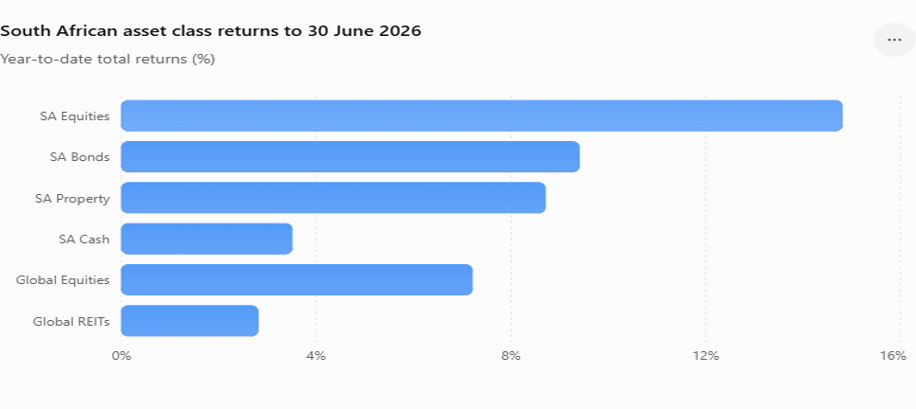
Key drivers and their impact on the Listed Property Performance
| Sector Driver | H1 2026 Impact |
| Stabilising interest rates | Positive |
| Improved occupancies | Positive |
| Distribution growth | Positive |
| Lower vacancies | Positive |
| Global volatility | Negative |
| Energy prices | Negative |
The South African listed property sector delivered a resilient performance during the first six months of 2026 despite a challenging global investment backdrop. Performance was underpinned by improving property fundamentals, disciplined balance sheet management by listed REITs, and continued investor demand for high-quality income-producing real assets. Although the operating environment remained influenced by elevated interest rates and geopolitical uncertainty, several structural and cyclical factors continued to support earnings growth and investor sentiment.
- Improving Property Fundamentals
Operating fundamentals across most major listed property portfolios continued to strengthen during the first half of 2026. Leasing activity improved across industrial and retail portfolios, while tenant retention rates remained high. Property owners were increasingly able to secure positive rental reversions on new leases and renewals, particularly within logistics, warehousing and convenience retail assets.
Portfolio occupancy levels continued to improve as economic activity gradually strengthened and businesses expanded their physical footprints. Better occupancy translated directly into stronger net property income growth and enhanced cash generation across most listed property companies.
- Distribution Growth and Earnings Resilience
Most South African REITs continued to report growth in distributable earnings, supported by improving rental income, effective cost management and lower levels of bad debts. Strong cash collections remained a notable feature across the sector, reflecting improved tenant quality and disciplined credit management.
Many listed property companies also benefited from active portfolio optimisation programmes, disposing of non-core assets while recycling capital into higher-growth sectors such as logistics, mixed-use precincts and convenience retail. These initiatives contributed to stronger earnings quality and supported sustainable dividend growth.
- Declining Vacancy Rates
Vacancy rates continued their gradual decline across most commercial property sectors. Industrial portfolios maintained exceptionally low vacancy levels, reflecting robust occupier demand and limited speculative development. Retail vacancy rates also remained well contained, particularly in grocery-anchored neighbourhood centres and township retail centres, where consumer footfall continued to improve.
Although the office sector remains structurally challenged, prime-grade and environmentally sustainable office buildings continued to attract tenants seeking modern, flexible workspaces. The gradual reduction in office vacancies has begun supporting rental stabilisation in selected metropolitan markets, particularly Cape Town and parts of Sandton.
- Continued Strength of the Industrial Sector
Industrial property remained the standout performer within the South African real estate market. Demand for modern logistics facilities, warehousing and distribution centres continued to outstrip new supply, resulting in sustained rental growth and exceptionally low vacancy rates.
Growth in e-commerce, manufacturing activity, third-party logistics providers and supply chain restructuring continued to support occupier demand. Investors increasingly favoured industrial assets due to their predictable cash flows, shorter capital expenditure cycles and superior income growth relative to other commercial property sectors.
- Resilient Retail Performance
The retail property sector demonstrated continued resilience despite ongoing pressure on household disposable incomes. Convenience shopping centres anchored by grocery retailers, pharmacies and essential service providers continued to outperform larger discretionary retail formats.
Township and rural retail centres remained among the strongest performing assets within the listed property universe. These centres benefit from resilient consumer spending patterns, favourable demographic trends and relatively limited competition. Property companies with significant exposure to lower-income consumer markets continued to report healthy tenant demand, strong rental collections and improving trading densities.
- Capital Management and Balance Sheet Strength
Listed property companies continued to demonstrate prudent capital allocation and conservative financial management. During the reporting period, several REITs reduced leverage through selective asset disposals, refinanced debt at favourable margins and extended debt maturity profiles to reduce refinancing risk.
The sector also maintained high levels of liquidity, providing management teams with flexibility to pursue value-enhancing acquisitions while preserving balance sheet resilience. Improved credit metrics contributed to stronger investor confidence and supported valuation recovery across the sector.
- Attractive Relative Valuations
South African listed property continued to trade at attractive valuation levels relative to both domestic equities and international REIT markets. Dividend yields remained materially above long-term government bond yields, providing investors with compelling risk-adjusted income returns.
The sector also benefited from improving net asset value (NAV) growth as property valuations stabilised and operating performance strengthened. This combination of attractive yields and improving fundamentals continued to attract institutional capital seeking defensive, income-generating investments.
- Macroeconomic and Interest Rate Environment
Although the South African Reserve Bank maintained a cautious monetary policy stance, inflation remained broadly contained during the reporting period. Expectations that the interest rate cycle is approaching its peak supported investor sentiment towards listed property, which is typically sensitive to movements in long-term bond yields and financing costs.
Lower inflation expectations, together with improving electricity supply reliability and gradually strengthening business confidence, created a more supportive operating environment for commercial property owners.
- External Risks
Despite these positive developments, several external risks continued to temper investor enthusiasm. Ongoing geopolitical tensions, elevated oil prices and global trade uncertainty contributed to higher market volatility. These factors increased inflation risks and introduced uncertainty around the future path of interest rates globally.
In addition, slower global economic growth and continued weakness in certain domestic sectors—particularly secondary office markets and older commercial buildings—remain important challenges that require active asset management and disciplined capital allocation.
Overall Assessment
The first half of 2026 demonstrated that South African listed property has entered a more sustainable phase of recovery. Improving operating fundamentals, disciplined balance sheet management and resilient tenant demand have supported earnings growth despite a challenging macroeconomic environment.
Looking ahead, industrial logistics assets, convenience retail centres and high-quality mixed-use precincts remain best positioned to deliver superior risk-adjusted returns. While global economic uncertainty is likely to persist during the remainder of 2026, the sector continues to offer attractive income yields, improving asset values and long-term capital appreciation potential for institutional investors.
| Company | FY2025 DPS | FY2026E DPS | Key Developments |
| Attacq | 87.0 cps | 92.0 cps | Strong Waterfall City performance; Mall of Africa consolidation |
| Fortress | 162.4 cps | 172.0 cps | Industrial vacancies below 4%; continued distribution growth |
| Growthpoint | 124.3 cps | 132.0 cps | Strong V&A Waterfront performance; improved SA operations |
| Hyprop | 398.1 cps | 425.0 cps | Strong retail trading densities and tenant demand |
| SA Corporate | 13.0 cps | 14.0 cps | Industrial portfolio remains fully occupied |
Growth in distributions has been underpinned by improved occupancy levels, rental reversions, and lower funding costs experienced during most of the reporting period.
Global Markets
Global markets remained volatile during the first half of 2026 due to:
- Middle East geopolitical tensions;
- Oil price volatility;
- Inflation uncertainty;
- Slower global economic growth;
- Divergent monetary policy responses.
The US economy remained resilient despite elevated inflation pressures, while China continued to implement targeted stimulus measures. Europe experienced modest growth amid ongoing fiscal concerns.
SOUTH AFRICAN ECONOMY
Monetary Policy
The South African Reserve Bank maintained a cautious monetary policy stance throughout the first half of 2026, prioritising inflation management amid heightened global uncertainty. The repo rate remained at 7.00% during June 2026 following earlier tightening measures.
Inflation versus Repo Rate

Retail Property Sector – Remains Resilient
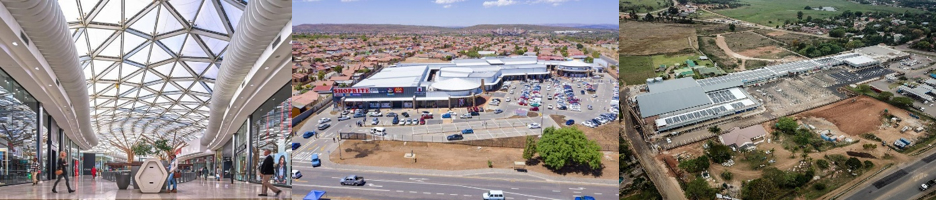
The retail property sector remained resilient during the first half of 2026, supported by:
- Stable consumer spending;
- Strong grocery-anchored centres;
- Continued growth in township retail;
- Improved trading densities;
- Low vacancy levels.
Township and convenience retail centres continued to outperform traditional metropolitan shopping centres, reflecting changing consumer spending patterns and demographic growth trends.
The continued outperformance of convenience and township retail centres during the first half of 2026 was underpinned by several structural changes in South African consumer behaviour and demographic trends. Despite ongoing pressure on household disposable income from elevated interest rates and higher utility costs, consumer spending remained relatively resilient in essential retail categories. Households increasingly prioritised expenditure on groceries, pharmaceuticals, healthcare, personal care products, telecommunications, education, and value-oriented discretionary goods, resulting in consistently high footfall at convenience shopping centres anchored by national supermarket chains and essential service providers.
Consumers also demonstrated a greater preference for shopping closer to where they live and work. Rising fuel costs, traffic congestion and transportation expenses encouraged more frequent visits to neighbourhood and township shopping centres rather than regional destination malls. This shift benefited convenience retail centres offering grocery stores, banking facilities, pharmacies, quick-service restaurants, government services and everyday household goods within easily accessible locations.
Demographic trends have further reinforced these performance characteristics. South Africa continues to experience rapid urbanisation, with a growing proportion of the population residing within metropolitan townships, peri-urban settlements and secondary cities. Population growth within these communities, together with ongoing household formation, has steadily expanded the customer base served by township retail centres. Younger population cohorts, increasing labour force participation and rising levels of formalisation within township economies have all contributed to stronger retail demand.
The expansion of the emerging middle-income consumer segment has also supported spending growth. Many township households continue to experience gradual improvements in income through formal employment, social grants, entrepreneurship and participation in the informal economy. This has translated into increased expenditure on higher-quality consumer goods, financial services, mobile technology, health and wellness products, and organised retail formats. Retailers have responded by expanding store formats, improving product offerings and increasing investment in township locations.
South Africa’s informal economy also plays a significant role in sustaining retail demand. The township economy is estimated to generate hundreds of billions of rand in annual economic activity through informal trade, small businesses, transport services, personal services and community enterprises. Although much of this activity is not fully reflected in official economic statistics, it supports significant consumer purchasing power and provides a stable customer base for formal retail centres located within these communities.
Another notable trend has been the continued growth of grant-supported household expenditure. Social grants remain an important contributor to household income across many lower- and middle-income communities, supporting consistent expenditure on essential goods throughout the month. This contributes to relatively stable trading patterns and lower earnings volatility for retailers serving these markets compared with retailers that rely more heavily on discretionary consumer spending.
For listed property investors, these structural demand drivers have translated into stronger tenant turnover, improving trading densities, lower vacancy rates and higher rental collections within convenience and township retail portfolios. REITs with meaningful exposure to these segments—including Fairvest, Vukile Property Fund, Exemplar REIT, Resilient REIT and selected assets within Fortress and SA Corporate—have generally reported more resilient operating performance than portfolios concentrated in traditional regional shopping centres or discretionary retail formats.
Looking ahead, continued urban population growth, infrastructure investment in township economies, improving retail formalisation and the expansion of essential service offerings are expected to remain key long-term drivers of convenience and township retail property performance. These structural trends continue to support the investment case for well-located retail assets that serve densely populated, under-serviced communities with strong and growing consumer catchment areas.
Industrial Property Sector – Best Performing Property Sector
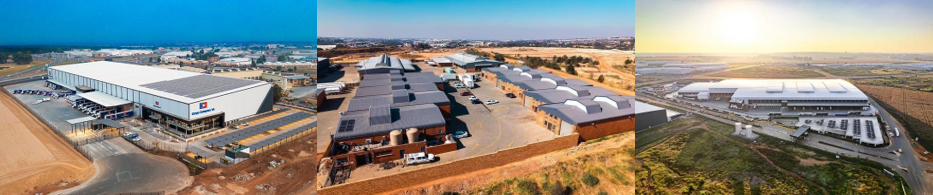
Industrial property remained South Africa’s strongest-performing commercial real estate sector.
Key characteristics included:
- Vacancy rates below 4%;
- Rental growth of 6% – 8%;
- Strong logistics demand;
- Limited new supply;
- Growth in manufacturing and e-commerce activity.
How These Drivers Reinforce Each Other
The industrial property sector has remained South Africa’s strongest-performing commercial real estate segment because several economic and structural factors are reinforcing one another, creating a virtuous cycle that supports both occupier demand and investor returns.
The starting point is strong occupier demand. As manufacturers, distributors, logistics companies, retailers and third-party logistics providers (3PLs) continue to optimise their supply chains, demand for modern warehousing and distribution facilities has remained robust. This demand has been further accelerated by the continued expansion of e-commerce, which requires strategically located fulfilment centres capable of supporting faster inventory turnover and last-mile delivery.
At the same time, new supply has remained constrained. Elevated construction costs, higher financing costs, infrastructure constraints and more disciplined development activity have limited speculative industrial developments. Developers have increasingly required significant pre-commitments from tenants before commencing construction, resulting in a relatively modest development pipeline.
This imbalance between strong demand and constrained supply has led to persistently low vacancy rates, with many prime industrial nodes reporting vacancies below 4%. As available space becomes increasingly scarce, landlords gain stronger negotiating power during lease renewals and new lease negotiations.
The consequence has been continued rental growth, particularly in well-located logistics corridors such as Cape Town, the East Rand, Durban and parts of the Western Cape. Higher rentals have translated directly into stronger net property income (NPI), improved distributable earnings and higher property valuations for industrial-focused REITs.
Manufacturing activity has also provided an important source of demand. Although South Africa’s manufacturing sector continues to face structural challenges, investment in automotive production, food processing, pharmaceuticals, renewable energy components and export-oriented industries has sustained demand for modern industrial facilities. In addition, continued investment in warehousing by retailers and logistics providers has further diversified the tenant base.
E-commerce remains another powerful structural driver. Consumers increasingly expect shorter delivery times, encouraging retailers to expand regional distribution networks and establish multiple fulfilment centres closer to major consumer markets. This trend has increased demand for large-format distribution centres, temperature-controlled facilities and urban logistics assets, all of which command premium rentals.
Collectively, these factors create a reinforcing cycle:
- Strong economic activity and supply-chain investment increase occupier demand.
- Limited new development restricts available space.
- Lower vacancies strengthen landlords’ pricing power.
- Higher rental growth increases net operating income.
- Improved earnings support dividend growth and higher asset valuations.
- Strong investment returns attract additional institutional capital into the sector, supporting further development of high-quality logistics assets.
This combination of structural demand, constrained supply and disciplined capital allocation has made industrial property one of the most defensive and attractive real estate sectors in South Africa.
Which Listed Property Companies Are Benefiting the Most?
Several listed property companies have positioned themselves to benefit from these favourable industrial market dynamics, although the extent of the benefit varies according to portfolio composition.
Fortress Real Estate Investments is arguably one of the largest beneficiaries. Its extensive logistics and warehousing portfolio continue to benefit from exceptionally low vacancies, strong tenant retention and positive rental reversions. Long-term relationships with national retailers, logistics operators and distribution companies provide stable cash flows and consistent distribution growth.
Growthpoint Properties has also benefited through its significant exposure to high-quality logistics and industrial assets across South Africa. Its portfolio has experienced improving occupancies, stronger rental collections and sustained demand from both manufacturing and distribution tenants. Growthpoint’s ability to recycle capital into higher-growth industrial assets has further strengthened earnings quality.
Equites Property Fund remains one of the purest industrial and logistics investment vehicles listed on the JSE. The company specialises in premium logistics facilities leased to blue-chip tenants on long-term agreements. Continued expansion in e-commerce, supply-chain modernisation and demand for distribution infrastructure have positioned Equites to benefit directly from these long-term structural trends.
SA Corporate Real Estate has continued to benefit from its industrial portfolio, which has consistently reported exceptionally low vacancy levels and resilient rental growth. Although industrial represents only part of its broader portfolio, it remains one of its strongest-performing asset classes and provides stability to overall earnings.
Redefine Properties has gradually strengthened its industrial exposure through portfolio repositioning. While retail and office assets remain significant contributors to earnings, industrial properties have become an increasingly important source of stable income growth.
Burstone Group (formerly Investec Property Fund) has continued to increase its exposure to logistics and industrial assets in both South Africa and Europe. This strategic shift has enhanced portfolio resilience and reduced reliance on more cyclical property sectors.
From an institutional investment perspective, companies with larger allocations to logistics and industrial assets are generally expected to continue outperforming more office-focused REITs. Industrial property offers stronger rental growth, lower vacancy rates, higher tenant retention and relatively predictable cash flows, making it particularly attractive in an environment of moderate economic growth and ongoing global uncertainty.
Looking ahead, the long-term investment case for industrial property remains compelling. Structural trends such as supply-chain optimisation, digital commerce, nearshoring, manufacturing investment and continued urbanisation are expected to sustain occupier demand, while disciplined development activity should help preserve favourable supply-demand dynamics. Consequently, industrial-focused REITs are likely to remain among the strongest contributors to earnings and dividend growth within the South African listed property sector.
Cape Town remained the strongest industrial market nationally, supported by supply constraints and robust tenant demand.
Office Property Sector – Recovery Continues
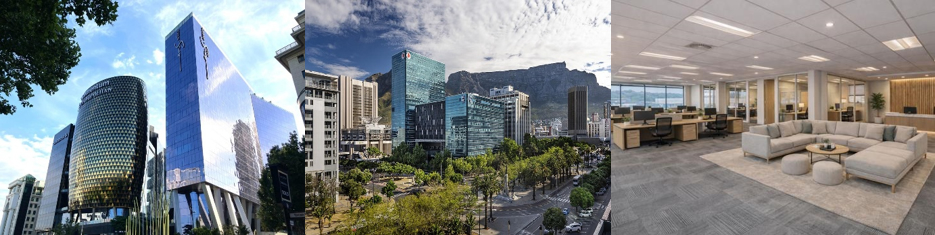
The South African office market continued its gradual recovery during H1 2026.
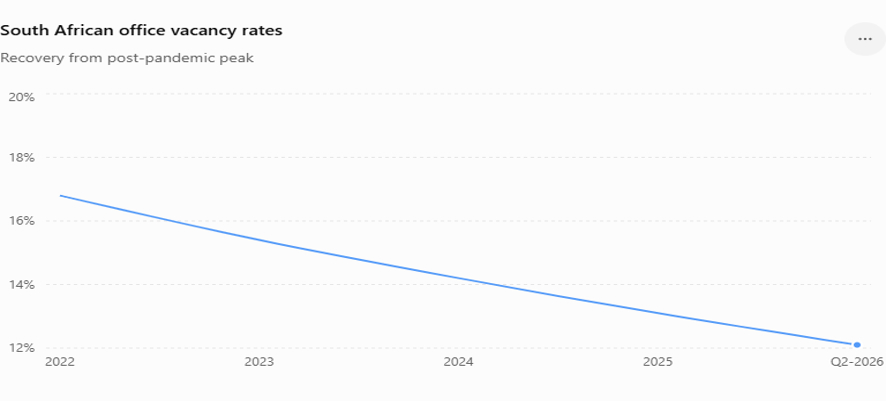
National office vacancy rates improved further to approximately 12.1%, representing the lowest level since early 2020. Prime and A-grade offices continued to outperform secondary stock.
- Flight to quality continues: Prime vacancy is 5.1%, A-grade 10.1%, while B- and C-grade sit above 16%.
- Cape Town leads the national recovery with overall vacancy of 6.0%, and decentralised vacancy of just 2.7%.
- Durban’s 11,7%, though improving, is still higher than Cape Town, but lower than Johannesburg’s 15.5%.
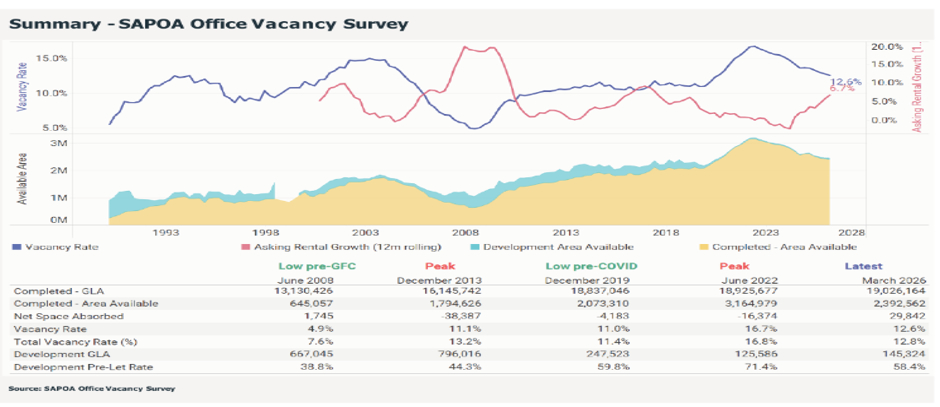
National Office Vacancy Trend – Recovery from Post-Pandemic Peak
GLOBAL REITS
Global REIT markets remained volatile during the first half of 2026 due to:
- Higher interest rate uncertainty;
- Geopolitical tensions;
- Slower economic growth expectations;
- Elevated energy prices.
Despite these challenges, global REIT valuations remain attractive relative to broader equity markets. Global REITs delivered mixed performance during the first half of 2026 as investors navigated elevated geopolitical tensions, persistent inflation concerns and uncertainty around the timing and pace of future interest rate reductions. Although the underlying operating performance of many property companies remained resilient, listed REIT valuations continued to be influenced by movements in bond yields and financing costs. Performance varied significantly by sector, with industrial logistics, data centres, healthcare and specialised real estate outperforming, while traditional office and certain retail sectors remained under pressure from changing occupier and consumer behaviour.
South African listed property companies experienced a different operating environment. While they were similarly affected by higher interest rates and global market volatility, improving domestic property fundamentals—including stronger occupancies, lower vacancy rates, resilient rental collections and positive rental reversions—supported earnings growth across much of the sector. Industrial logistics assets and convenience retail centres continued to outperform, reflecting sustained occupier demand, limited new supply and resilient consumer spending, while the office market showed gradual signs of recovery.
The key difference between global and South African REITs lies in both portfolio composition and valuation. Global REITs provide broader exposure to specialised property sectors such as data centres, healthcare, student accommodation and digital infrastructure, whereas South African REITs remain predominantly invested in retail, industrial and office assets. However, South African REITs continue to offer comparatively attractive dividend yields and discounted valuations, making the sector particularly appealing to income-focused institutional investors as domestic property fundamentals continue to strengthen.
OUTLOOK FOR H2 2026
The outlook for South African property remains constructive.
Key Opportunities
- Attractive dividend yields
- Improving operating fundamental
- Strong industrial markets
- Township retail growth
- Recovering office markets
Key Risks
- Global geopolitical tensions
- Inflation pressures
- Higher energy prices
- Interest rate uncertainty
- Global economic slowdown
Looking ahead, the outlook for the South African listed property sector remains cautiously optimistic. Improving property fundamentals—including lower vacancy rates, positive rental reversions, resilient tenant demand and disciplined capital management—are expected to continue supporting growth in distributable earnings and dividend distributions. Industrial logistics assets should remain the strongest-performing sector, benefiting from structural demand driven by supply chain optimisation, manufacturing investment and e-commerce expansion. Convenience and township retail centres are also well positioned as population growth, urbanisation and resilient spending on essential goods continue to underpin tenant performance and rental growth. Although the office sector is recovering more gradually, declining vacancies in prime-grade buildings and limited new development suggest that rental growth should steadily improve over the medium term.
These positive sector dynamics are reinforced by attractive valuations and dividend yields, which continue to compare favourably with other domestic asset classes. As property operating performance improves and balance sheets remain conservatively managed, investor confidence is expected to strengthen further, particularly if inflation remains contained and interest rates stabilise or begin to decline. Together, these factors could support both income growth and capital appreciation, making listed property increasingly attractive to long-term institutional investors seeking stable, inflation-linked cash flows.
Nevertheless, several risks could temper the pace of recovery. Continued geopolitical tensions, higher energy prices and global trade uncertainty could place upward pressure on inflation and delay the easing of monetary policy, resulting in higher borrowing costs for both property companies and tenants. A slower-than-expected global economy could weaken business confidence, reduce occupier demand and constrain rental growth, particularly within the office sector. Domestically, infrastructure constraints, municipal service delivery challenges and electricity and logistics bottlenecks remain structural risks. However, provided these headwinds remain manageable, the South African listed property sector appears well positioned to continue its recovery through the remainder of 2026, with industrial and convenience retail assets expected to remain the primary drivers of performance.
STRATEGIC IMPLICATIONS
Our preferred property themes for the second half of 2026 remain:
- Industrial logistics assets
- Township and convenience retail
- Prime mixed-use precincts
- Infrastructure-linked property
- Selective office repositioning opportunities
South African property continues to offer compelling risk-adjusted returns, particularly where asset quality, management capability and capital discipline intersect.
We ask you to be safe, and feel free to contact us with any questions. We appreciate your support and confidence in us, in being able to manage and grow your wealth.

Vuyani Bekwa: Principal – Private Equity
Vuyani is the Principal – Private Equity with strong expertise in listed property, asset management, fund management and private equity. He holds a B Admin (Economics), University of Western Cape, a Post-Grad Diploma in Business Management and a Master-in-Business Administration (MBA), both from University of KwaZulu-Natal. He also has a FSCA accreditation with the RE5 and RE3 certification.
He began his career as an economic researcher for South Africa’s first socially responsible unit trust in 1995. He then moved into listed property and equity investment analysis when he moved to Marriott Asset Management (now part of Old Mutual Investment Group) in 1997. He then spent 6 years managing listed property portfolios and being the portfolio manager for the Investec Property Equity Fund (now part of Ninety-One). He has spent the last ten years focusing on private equity structures, either setting up or managing capital into funds, some with an impact focus. He is currently busy focusing on the MSM Infrastructure Impact Fund, which is looking for exposure into Industrial and Social infrastructure assets.